Aruba Isn’t A Wireless Company (Any More)

Remember when Aruba was a wireless company? I know it sounds like something that happened 40 years ago but the idea that Aruba only really made wireless access points and some campus switches to support them isn’t as old as you think. The company, now known as HPE Aruba Networking (née Aruba, a Hewlett Packard Enterprise Company), makes more than just Wi-Fi gear. Yet the perception of the industry is that they’re still a wireless company looking to compete with the largest parts of the market.

Branching Out of Office

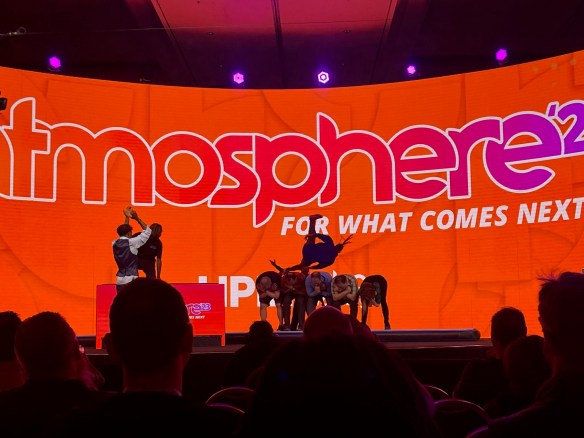
This year’s Aruba Atmopshere showed me that Aruba is trying to do more than just campus wireless. The industry has shifted away from just providing edge connectivity and is now focused on a holistic lineup of products that are user-focused. You don’t need to go much further than the technical keynote on the second day of the conference to see that. Or the Networking Field Day Experience videos linked above.

Do you know what Aruba wanted to showcase?

  • Campus Switches
  • Data Center Switches
  • Private 5G/LTE
  • SASE/SSE
  • IoT
  • Cloud-Enabled Management

You know what wasn’t on that list? Access points. For a “wireless” company that’s a pretty glaring omission, right? I think it’s actually a brilliant way to help people understand that HPE Aruba Networking is a growing part of the wider HPE business dedicated to connectivity.

It’s been discussed over the years that the HPE acquisition of Aruba was a “reverse acquisition”. That basically means that HPE gave Aruba control over their campus (and later data center) networking portfolio and let them run with it. It was successful and really helped highlight the needs that HPE had in that space. No one was talking about the dominance of Procurve switches. HPE was even reselling Arista gear at the time for the high end customers. Aruba not only was able to right the ship but help it grow over time and adopt home-grown offerings.

When you think of companies like Juniper and Cisco, do you see them as single product vendors? Juniper makes more than just service provider routers. Cisco makes more than just switches. They have distinct lines of business that provide offerings across the spectrum. They both sell firewalls and access points. They both have software divisions. Cisco sells servers and unified communications gear on top of everything else they do. There’s more to both of them than meets the eye.

Aruba needed to shed the wireless moniker in order to grow into a more competitive market segment. When you’re known as a single product vendor you tend to be left out of conversations. Would you call Palo Alto for switches or wireless? No, because they’re a firewall or SASE company. Yes, they make more than those products but they have a niche, as opposed to more diverse companies. I’m not saying Palo Alto isn’t diverse, just that they define their market segment pretty effectively. So much so that people don’t even call application firewalls by that name any longer. They’re “Palo Altos”, giving the company the same generic trademark distinction as Kleenex and Velcro.

User Face-to-Face

Aruba needs to develop the product lines that help get users connected. Wireless is an easy layup for them now so where do they expand? Switches are a logical extension so the CX lines were developed and continue to do well. The expansion into private LTE and security also help significantly, which are bolstered by their recent acquisitions.

Security is an easy one to figure out. Aruba has gone from SD-Branch, focused on people working in remote offices, to add on true SD-WAN functionality with the Silver Peak purchase, to now offering SSE with Axis Security being folded in to the mix. SSE is a growing market segment because the services offered are what users consume. SASE works great if you’re working from home all the time. In the middle of the pandemic that was a given. People had home offices and did their work there.

But now that restrictions are relaxed and people aren’t going into the office all the time. This hybrid work model means no hardware to do the inspection. Since SSE is not focused on hardware it’s a great fit for a mobile hybrid workforce. If you remember how much Aruba was touting the BYOD wireless-only office trend back in 2016 and 2017 you can see how SSE would have been a wonderful fit back then if it had existed. Given how the concept of a wireless-only BYOD office was realized through not having an office I’d say SSE is a perfect fit for the modern state of the enterprise.

Private 5G is a bit more complicated. Why would Aruba embrace a technology that effectively competes with its core business? I’d say that’s because they need to understand the impact that private cellular will have on their business. People aren’t dumping Wi-Fi and moving en masse to CBRS. We’ve reached a point where we’re considering what the requirements for private LTE deployments need to look like and where the real value lies for them. If you have a challenging RF environment and have devices capable of taking SIM cards it makes a lot of sense. Aruba having a native way of providing that kind of connectivity for users that are looking to offer it is also a huge win. It’s also important to note that Aruba wants to make sure it has complete control over the process, so what better way than acquiring a mature company that can integrate into their product lines?


Tom’s Take

I can’t take full credit for this idea. Avril Salter pointed it out during a briefing and I thought it was a wonderful point. Aruba isn’t a wireless company now because they’ve grown to become a true networking company. They offer more than just APs and devices that power them. There have a full line of products that address the needs of a modern user. The name change isn’t just a branding exercise. It represents a shift in the way people need to see the company. Growing beyond what you used to be isn’t a bad thing. It’s a sign of maturity.

The Conundrum of Virtual Conferences

Okay, the world is indeed crazy. We can’t hide from it or hope that it just blows over sooner or later. We’re dealing with it now and that means it’s impacting our work, our family lives, and even our sanity from time to time. One of the stalwart things that has been impacted by this is the summer conference schedule. We’ve had Aruba Atmosphere, Cisco Live, VMworld, and even Microsoft Ignite transition from being held in-person to a virtual format complete with shortened schedules and pre-recorded sessions. I’ve attended a couple of these so far for work and as an analyst, and I think I’ve figured it out.

If you come to a conference for content and sessions, you’ll love virtual events. If you come for any other reason, virtual isn’t going to work for you.

Let’s break this down because there’s a lot to unpack.

Information Ingestion

Conferences are first and foremost about disseminating information. Want to learn what new solutions and technologies have been launched? It’s probably going to be announced either right before or during the conference. Want to learn the ins-and-outs of this specific protocol? There’s probably a session on it or a chance to ask a professional engineer or architect about it. There’s a lot of content to be consumed at the conference. So much, in fact, that in recent years the sessions have started to be recorded and posted for consumption after the fact. You can now have access to a library of any topic you could ever want. Which comes in really handy when your boss decides in November that you’re going to be the new phone person…

Because all this content has been recorded and published before, transitioning the content to a virtual format is almost seamless. The only wrinkle is that people are going be recording from their home instead of a blast freezer ballroom in the Mandalay Bay. That means you’re going to need tighter control over things like environment and video recordings. Your people are going to have to get good and talking and setting up their screens to be effective. Most good presenters can do this already. Some need some coaching. Most are going to need a few takes to get it right since they aren’t going to be editing together their own video. But the end result is going to be the same. You’re going to have great content to share with people to be consumed over the course of days or weeks or even months.

Keynotes are a little bit harder to quantify in this content category. They are definitely content, just not for tech people. Keynotes are analyst and press fodder. It’s a packaging of the essence of the event in an hour-long (or longer) format designed to hit the important points for tweets and headlines. Keynotes are very, very, very rehearsed. No one tends to go off the script unless it’s absolutely necessary. Even the off-the-cuff remarks are usually scripted and tested for impact ahead of time. If a joke fails to land, just imagine the three others they tried that were worse.

But keynotes at a virtual event can be more impactful. Because you can do some editing you can put together different takes. You can inject some emotion. You can even use it as a platform for creating change. I specifically want to call out the Cisco Live keynote from Chuck Robbins this year. It wasn’t about tech. We didn’t really hear about protocols or hardware. Instead, Chuck used his platform to talk about the drivers of technology. He stood up and told the world how we need to use our talents and our toys to build a better world for ourselves and for everyone around us. Chuck didn’t mince words. He postponed Cisco Live by two weeks to highlight the struggles and causes that are being shown nightly on the news. He wanted us to see the world he and his company are trying to help and build up. And he used the keynote slot to push that message. No flashy numbers or sparkly hardware. Just good, old fashioned discussion.

Virtual Hallways

Every positive thing should have something corresponding to balance it out. And for virtual conferences, it’s the stuff that’s not about content. Ironically enough, that’s the part that I’ve been so steeped in recently. Sure, Tech Field Day produces a lot on content around these events. I’m happy to be able to be a part of that. But the event is more than just videos and slide decks. It’s more than just sitting in uncomfortable chairs in a meat locker nursing a hangover trying to understand the chipset in a switch.

Conferences are as much about community as anything else. They’re about seeing your friends in-person. Conferences are about hallway conversations about random topics and taking a taxi to a bar halfway down the Vegas Strip to meet up with a couple of people and some person you’ve never even heard of. It’s about meeting the co-workers of your friends and pulling them into your circle. It’s about sharing hobbies and life stories and learning about the crazy haircut someone’s kid gave themselves right before they left.

Community matters to me most of all. Because a conference without a community is just a meeting. And that part is missing virtually. I did my best with an attempt to do Tom’s Virtual Corner with our community. I was shocked and pleased at the number of people that joined in. We had over 50 people on the calendar invite and over a dozen connected at any one time. It was wonderful! But it wasn’t the corner that we know and love. It’s not that it wasn’t special. It was totally special and I appreciate everyone that took time out of their day to take part. But there are some things that are missing from the virtual experience.

I’ll take myself for example. I have two problems that I have to overcome at events:

  1. I’m a story teller.
  2. Other people need to talk too.

If I get on a tear with number one, number two won’t happen. At an in-person event it’s easy enough for me to deal with the first one. I just pull interested people aside for a small group conversation. Or I wait for a different time or another day to tell my story. It’s easy enough to do when you spend sixteen hours around people on average and even more well into the night with friends.

However, those above things don’t really work on Zoom/Webex/GoToMeeting. Why? Well, for one thing you can only really have one speaker at a time. So everyone needs to keep it short and take turns. Which leads to a lot of waiting to talk and not so much for listening. Or it leads to clipped quips and not real discussion. And before you bring up the breakout room idea, remember that mechanically there is a lot of setup that needs to happen for those. You can’t just create one on the fly to tell a story about beanbags and then just hop back into the main room. And, breakout rooms by their very nature are exclusionary. So it’s tough to create one and not want to just stay there and let people come to you.


Tom’s Take

This is just a small part of the missing aspect of virtual conferences. Sure, your feet don’t hurt at the end of the day. I’d argue the food is way better at home. The lack of airports and hotel staff isn’t the end of the world. But if your primary focus for going to events is to do everything other than watching sessions then the virtual experience isn’t for you. The dates for Cisco Live 2021 and Aruba Atmosphere 2021 have already been announced. I, for one, can’t wait to get back to in-person conferences. Because I miss the fringe benefits of being in-person more than anything else.

Fast Friday – Aruba Atmosphere 2019

A couple of quick thoughts that I’m having ahead of Aruba Atmosphere next week in Las Vegas, NV. Tech Field Day has a lot going on and you don’t want to miss a minute of the action for sure, especially on Wednesday at 3:15pm PST. In the meantime:

  • IoT is really starting to more down-market. Rather than being focused on enabling large machines with front-end devices to act as gateways we’re starting to see more and more IoT devices either come with integrated connective technology or interface with systems that do. Building control systems aren’t just for large corporations any more. You can automate an office on the cheap today. Just remember that any device that can talk can also listen. Security posture is going to be huge.
  • I remember some of the discussions that we had during the heady early days of SDN and how unimpressed wireless and mobility people were when they figured out how the controllers and dumb edge devices really worked. Most wireless pros have been there and done that already. However, recently there has been a lot of movement in the OpenConfig community around wireless devices. And that really has the wireless folks excited. Because the promise of SDN for them has never been about control, but instead about compatibility. The real key isn’t building another controller but instead making all the APs and controllers work better together.
  • Another great thing I’m looking forward too seeing at Atmosphere is Aruba HER. It’s an event focused on building stronger communities and increasing diversity for all. You can read a bit more about what will be going on there in this post from Claire Chaplais. Make sure to check out Zoë Rose keynoting the event as well! She’s got a very powerful story to tell. She gave us all a bit of it at Security Field Day last December in this Ignite Talk.

Tom’s Take

Make sure you stay tuned for all the things we’re going to be discussing during the event. We’re going to be using the event hashtag #ATM19 but also using #MFDx as a way to let you know about the great stuff we will have going on!