Is It Time To Eliminate Long Distance?

Embed from Getty Images

“What’s your phone number?”

It seems like an innocuous question.  But what are you expecting?  Phone numbers in the US can vary in length greatly depending up on where you live.  I grew up in a small town.  My first telephone line was a party line.  Because there were four families on the same line, phone numbers didn’t mean much beyond getting you to the general location.  When we moved into town we finally got our own telephone line.  But the number was only four digits, like a PBX extension.  Since all phones in two had the same prefix, all calls were switched via the last four digits.  The day finally came when we all had to dial the prefix along with the four-digit number.  Now were were up to seven.

If you ask someone their phone number, you’re likely to get any one of several number combinations.  Seven digits, ten digits, or even eleven digits for those that do international business.  Computer systems can be coded to automatically fill in the area code for small stores that need contact information.  Other nationwide chains ask for the area code every time.  And those international business people always start their number with “+1”, which may not even be an option on the system.  How do we standardize?

Cracking The Code

Part of our standardization issues come from the area codes we’ve been using for sixty years.  Originally conceived as a way to regionalize telephone exchanges, area codes have become something of a quandary.  In larger cities, we use 10-digit phone dialing because of overlay area codes.  Rather than using one code for all the users in a given area, the dial plan has grown so large that more codes were needed to serve the population.  In order to insure these codes are used correctly you must dial all ten digits of the phone number.

In smaller locations still served by one area code, the need for 10-digit dialing is less clear. In my home area code of 405, I don’t need to dial ten digits to reach the Oklahoma City metro area.  If I want to dial outside of my area code, I need to use the long distance prefix.  However, there are some areas in the 405 area code that are not long distance but require dialing 405.  These are technically Inter-LATA Intrastate long distance calls.  And the confusion over the area codes comes down to the long distance question.

Going the Distance

The long distance system in America is the cause of all the area code confusion.  Users universally assume that they need to dial a 1 before any number to cross area codes.  That is true in places where a given area code covers all users.  But users also need to dial the long distance code to access users on different phone systems and in different towns.  It’s difficult to remember the rules.  And when you dial a 1 and it’s not needed, you get the reorder tone from your telco provider.

Now add mobile phones into the equation.  My friend from college still has the same mobile number he had ten years ago in this area code.  He lives in Seattle now.  If I want to call and talk to him, it’s a local call on my home phone.  If his next door neighbor wants to call him it will be a long distance call.  Many people still have their first mobile number even though they have moved to area codes across the country.

Mobile phone providers don’t care about long distance calls.  A call to a phone next to you is no different than a call to a phone in Alaska.  This reinforces the importance on 10-digit dialing.  I give my mobile number as ten digits all the time, unless I give the 11-digit E.164 globalized E.164 number.  It’s quick and easy and people in large areas are used to it.

It’s time to do the same for landline phones.  I think the utility for landlines would increase immensely if long distance was no longer an issue.  If you force all users to dial ten digits they won’t mind so long as the calls can be routed anywhere in any area code.  When you consider that most phone providers give users free long distance plans or even service for just a few cents, holding on to the idea of long distance calls makes little to no sense.


Tom’s Take

As a former voice engineer, long distance always gave me fits.  People wanted to track long distance calls to assign charges, even when they had hundreds of minutes of free long distance.  The need to enter a long distance access code rendered my Cisco Cius unusable.  I longed for the day that long distance was abolished.

Now, local phone companies see users evaporating before their very eyes.  No one uses their home phone any more.  I know I never answer mine, since most of the calls are from people I don’t want to talk to.  I think the last actual call I made was to my mother, which just happened to be long distance.

If telcos want users to use landlines, they should abolish the idea of long distance and make the system work like a mobile phone.  Calling my neighbor with a 212 area code would just require a 10-digit call.  No long distance.  No crazy rules.  Just a simple phone call.  People would start giving 10-digit numbers.  Billing would be simplified.  The world would be a better place.

Twitter Tips For Finding Followers

new-twitter-logo

I have lots of followers on Twitter.  I also follow a fair number of people as well.  But the ratio of followers to followed isn’t 1:1.  I know there are a lot of great people out there and I try to keep up with as many of them as I can without being overwhelmed.  It’s a very delicate balance.

There are a few things I do when I get a new follower to decide if I want to follow them back.  I also do the same thing for new accounts that I find.  It’s my way of evaluating how they will fit into my feed.  Here are the three criteria I use to judge adding people to my feed.

Be Interesting

This one seems like a no brainer, right?  Have interesting content that people want to read and interact with.  But there’s one specific piece here that I want to call attention to.  I love reading people with original thoughts.  Clever tweets, interesting observations, and pertinent discussion are all very important.  But one thing that I usually shy away from is the account that is more retweets than actual content.

I don’t mind retweets.  I do it a lot, both in quote form and in the “new” format of pasting the original tweet into my timeline.  But I use the retweet sparingly.  I do it to call attention to original thought.  Or to give credit where it’s due.  But I’ve been followed by accounts that are 75% (or more) retweets from vendors and other thought leaders.  If the majority of your content comes from retweeting others, I’m more likely to follow the people you’re retweeting and not you.  Make sure that the voice on your Twitter account is your own.

Be On Topic

My Twitter account is about computer networking.  I delve into other technologies, like wireless and storage now and then.  I also make silly observations about trending events.  But I’m on topic most of the time.  That’s the debt that I owe to the people that have chosen to follow me for my content.  I don’t pollute my timeline with unnecessary conversation.

When I evaluate followers, I look at their content.  Are they talking about SANs? Or are they talking about sports?  Is their timeline a great discussion about SDN? Or check ins on Foursquare at the local coffee shop?  I like it when people are consistent.  And it doesn’t have to be about technology.  I follow meteorologists, musicians, and actors.  Because they are consistent about what they discuss.  If you’re timeline is polluted with junk and all over the place it makes it difficult to follow.

Note that I do talk about things other than tech.  I just choose to segregate that talk to other platforms.  So if you’re really interested in my take on college football, follow me on Facebook.

Be Interactive

There are lots of people talking on Twitter.  There are conversations going on every second that are of interest to lots of people.  No one has time to listen to all of them.  You have to find a reason to be involved.  That’s where the interactivity aspect comes into play.

My fifth tweet was interacting with someone (Ethan Banks to be precise):

If you don’t talk to other people and just blindly tweet into the void, you may very well add to the overall body of knowledge while missing the point at the same time.  It’s called “social” media.  That means talking to other people.  I’m more likely to follow an account that talks to me regularly.  That tells me I’m wrong or points me at a good article.  People feel more comfortable with people they’ve interacted with before.

Don’t be shy.  Mention someone.  Start a conversation.  I’ll bet you’ll pick up a new follower in no time.


Tom’s Take

These are my guidelines.  They aren’t hard-and-fast rules.  I don’t apply them to everyone. But it does help me figure out if deeper analysis is needed before following someone.  It’s important to make sure that the people you follow help you in some way.  They should inform you.  They should challenge you.  They should make you a better person.  That’s what social media really means to me.

Take a look at your followers and find a few to follow today.  Find that person that stays on topic and has great comments.  Give them a chance.  You might find a new friend.

Don’t Track My MAC!

track

The latest technology in mobile seems to be identification.  It has nothing to do with credentials.  Instead, it has everything to do with creating a database of who you are and where you are.  Location-based identification is the new holy grail for marketing people.  And the privacy implications are frightening.

Who Are You?

The trend now is to get your device MAC address and store it in a database.  This allows the location tracking systems, like Aruba Meridian or Cisco CMX, to know that they’ve seen you in the past.  They can see where you’ve been in the store with a resolution of a couple of feet (much better than GPS).  They now know which shelf you are standing in front of.  Coupled with new technologies like Apple iBeacon, the retailer can push information to your mobile device like a coupon or a price comparison with competitors.

It’s a fine use of mobile technology.  Provided I wanted that in the first place.  The model should be opt-in.  If I download your store’s app and connect to your wifi then I clicked the little “agree” box that allows you to send me that information.  If I opt-in, feel free to track me and email me coupons.  Or even to pop them up on store displays when my device gets close to a shelf that contains a featured item.  I knew what I was getting into when I opted in.  But what happens when you didn’t?

Wifi, Can You Hear Me?

The problem comes when the tracking system is listening to devices when it shouldn’t be. When my mobile device walks into a store, it will start beaconing for available wifi access points.  It will interrogate them about the SSIDs that they have and whether my device has associated with them.  That’s the way wifi works.  You can’t stop that unless you shut off your wireless.

If the location system is listening to the devices beaconing for wifi, it could be enabled to track those MAC addresses that are beaconing for connectivity even if they don’t connect.  So now, my opt-in is worthless.  If the location system knows about my MAC address even when I don’t connect, they can push information to iBeacon displays without my consent.  I would see a coupon for a camping tent based on the fact that I stood next to the camp stoves last week for five minutes.  It doesn’t matter that I was on a phone call and don’t have the slightest care about camping.  Now the system has started building a profile of me based on erroneous information it gathered when it shouldn’t have been listening.

Think about Minority Report.  When Tom Cruise is walking through the subway, retinal scanners read his print and start showing him very directed advertising.  While we’re still years away from that technology, being able to fingerprint a mobile device when it enters the store is the next best thing.  If I look down to text my wife about which milk to buy, I could get a full screen coupon telling me about a sale on bread.

My (MAC) Generation

This is such a huge issue that Apple has taken a step to “fix” the problem in the beta release for iOS 8.  As reported by The Verge, iOS 8 randomizes the MAC address used when probing for wifi SSIDs.  This means that the MAC used to probe for wifi requests won’t be the same as the one used to connect to the actual AP.  That’s huge for location tracking.  It means that the only way people will know who I am for sure is for me to connect to the wifi network.  Only then will my true MAC address be revealed.  It also means that I have to opt-in to the location tracking.  That’s a great relief for privacy advocates and tin foil hat aficionados everywhere.

It does make iBeacon configuration a bit more time consuming.  But you’ll find that customers will be happier overall knowing their information isn’t being stored without consent.  Because there’s never been a situation where customer data was leaked, right? Not more than once, right?  Oh, who am I kidding.  If you are a retailer, you don’t want that kind of liability on your hands.

Won’t Get Fooled Again

If you’re one of the retailers deploying location based solutions for applications like iBeacon, now is the time to take a look at what you’re doing.  If you’re collecting MAC address information from probing mobile devices you should turn it off now.  Yes, privacy is a concern.  But so is your database.  Assuming iOS randomizes the entire MAC address string including the OUI and not just the 24-bit NIC at the end, your database is going to fill up quickly with bogus entries.  Sure, there may be a duplicate here and there from the random iOS strings, but they will be few and far between.

More likely, your database will overflow from the sheer number of MACs being reported by iOS 8 devices.  And since iOS7 adoption was at 87% of compatible devices just 8 months after release, you can guarantee there will be a large number of iOS devices coming into your environment running with obfuscated MAC addresses.


Tom’s Take

I don’t like the idea of being tracked when I’m not opted in to a program.  Sure, I realize that my usage statistics are being used for research.  I know that clicking those boxes in the EULA gives my data to parties unknown for any purpose they choose.  And I’m okay with it.  Provided that box is checked.

When I find out my data is being collected without my consent, it gives me the creeps.  When I learned about the new trends in data collection for the grand purposes of marketing and sales, I wanted to scream from the rooftops that the vendors needs to put a halt to this right away.  Thankfully, Apple must have heard my silent screams.  We can only hope that other manufacturers start following suit and giving us a method to prevent this from happening.  This tweet from Jan Dawson sums it up nicely:

Cisco Live 2014 – Recap

CLUS Social Media

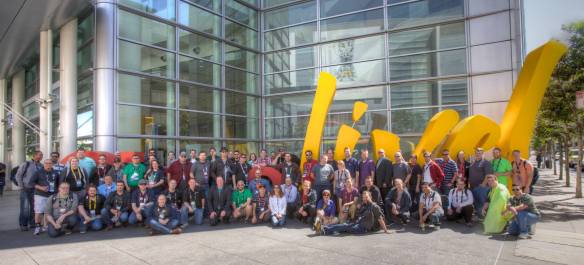
Cisco Live Twitterati and Social Media Rockstars

Cisco Live 2014 was a rollicking fun ride from start to finish this year.  Lots of people to see and things to do.  The social media aspect of Cisco has come full circle as well.  No longer are social folks trying to borrow chairs at lunch tables or finding spots to camp out for keynotes.  Social is integrated into everything now at all levels.  And that’s because of the people.  But I’m getting ahead of myself here.

The Places

Cisco Live seemed a bit spread out this year.  But that’s not the fault of Cisco.  It’s because Moscone wasn’t designed to handle an influx of people like this.  Who has a 25,000 attendee convention?  Cisco Live overwhelmed the place.  You couldn’t walk on the streets without seeing CLUS badges.  Mel’s Drive-In was packed every day.  Moscone was built for a day when 10,000 people was a lot.  Now it’s just too small.  Sessions spread across three buildings.  People loading for the keynote through the tunnels.  Moscone needs an upgrade before CLUS comes back again.

That being said, the location of the Social Media Hub (upgraded to the Social Media Routed Bridge on Foursqure) and the Tweetup area were spot on this year.  Right inside the doors at Moscone South.  Easy to find.  Great to hangout within.  Easy access to keynote monitors.  Except for the ever-present DJ, it was close to perfect.  Seeing how the  hub has grown really makes me proud.  Social is starting to be a bigger part of everything. And that’s because of the people.

The People

People make the event.  Plain and simple.  Cisco Live is like the biggest family reunion you’ll ever get to attend.  Catching up with old friends.  Meeting new ones.  Staying out until the wee hours of the morning discussing routing design with four people you met two hours ago.  Those are the kinds of memories you won’t forget any time soon.

This year was packed with greatness.  People that wanted to get involved.  People that helped make the event bigger than it’s ever been.  The first introduction of the Cisco Champions at Cisco Live.  The Tech Field Day roundtables.  Even walking the show floor and bumping into friends working the booths.  That shows me that the power of a single person on Twitter or on a blog is starting to have a huge impact on the perception of a brand.

One voice makes a difference.  One person can influence a group and bring about change.  Sometimes it’s small, like getting getting friends to meet up to got to lunch.  Other times it’s the CLUS Scavenger Hunt, where dozens of people competed for prizes.  Still bigger is the Sunday evening tweetup, where 150 social media rockstars showed how powerful our voices can be.  It’s important to remember that people are watching the things you say.  You can have an impact.  When you realize that, you’ll know just how powerful you can truly be.

Tom’s Take

I was talking with Amy Lewis (@CommsNinja) during the Customer Appreciation Event about how far we’ve come since Tom’s Corner just a few years ago.  In fact, we took a pic that someone remarked “made us look like proud parents”.

AmyTom

We are proud parents.  But only because our kids, namely you, have shown everyone how to make it on their own in the crazy social media world.  We’re a community now.  This isn’t a club or a clique.  This is about awesome people coming together to be a part of something greater.  That’s what gestalt means.  We’re greater than the sum of our parts.  Cisco Live is our chance to shine.  Sure, we have goofy jokes.  We give each other bats and t-shrts and tiaras.  But that’s because we want to show each and every one how important they are.

Every year we have more people at Cisco Live.  We have more and more people joining the community.  But we also have those that can’t make it back for one reason or another.  They are always missed.  But it does show everyone how the community keeps going every year.  And that’s what makes me the most proud.  That the community can and will endure.

Thanks to everyone that said “hello” during Cisco Live.  Thanks also to Cisco and their great staff for making CLUS 2014 so amazing.  We always appreciate everything you do for us.  Next year in San Diego is shaping up to be epic again.  Let’s make our voices heard once more!