The Hook Brings You Back

If I asked you to summarize the great works of literature in a few paragraphs, how would you do it? Would you read over the whole thing and try to give a play-by-play of the book? Would it be more like Cliff’s Notes, summarizing the major themes but skipping over the details? Maybe you’d offer up the conclusion only and leave it as an exercise to the reader to find out? There are a lot of ways to do it and almost all of them seem insurmountable.

What if there was an easy way to jump right into starting to discuss a topic or summarize something? What if you could find a way to easily get people interested in your ideas? Believe or not, it’s not as hard as you might think. People usually freak out because they feel like there are too many places to start when they want to write something. They decide to try and figure out the perfect way to get going and, more often than not, they paralyze themselves with inaction.

So how do you get things moving? You have to find the hook.

By Hook or Crook

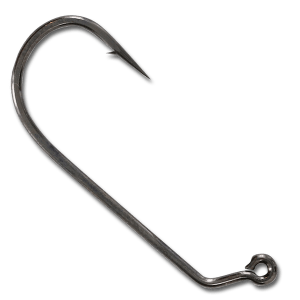
What’s the hook? Most people think it’s like a fish hook. Something you set to reel someone in. And that’s not far from the truth. The hook, when talking about writing or even music, is a section that is designed to catch your attention and keep it. The hook is what’s responsible for those catchy choruses you can’t get out of your head once you hear them.

But the hook is also the way you can get into a heady topic. The hook is the way you get things start. You find the attention-catching part of the story or the topic that you want to talk about and you grab it. Set the hook. That’s the first step. Figuring out what you want to talk about and setting that hook.

The key is to avoid getting overwhelmed. Don’t try to say too much. The hook doesn’t work if it’s too big. It doesn’t work if it’s too complicated. You have to find something small and relatable if you want people to bite. You need a single idea. A single topic of some kind. Make it easy and your audience will surely bite on it.

Reeling Them In

Okay, so you’ve successfully set the hook. Now what? Do you just tug and tug on it until you get what you’re after? Every fisherman knows that’s a bad idea. You have to gently pull and convince your quarry to come. You have to build something that leads people to where you want them to be.

Writing is no different. You have your hook but you have to support it with facts and evidence. You have to come back to your main idea and reinforce it over and over. That’s how the hook gets into the reader’s mind. You have to make sure they aren’t going to forget it. The hook is the takeaway from the piece you’re writing.

When your reader finishes you want them to have that idea ringing in their ears and in their head. You want them to think of your idea like a chorus from a song. Resonating and repeating. Not in the insidious ear worm kind of way. But in the way of your favorite movie scenes or favorite songs. Something that they enjoy and want to keep coming back to.

Fishing In Practice

Okay, so this is all well and good when you’re trying to sit down and write something. But what about when you’re listening to a presentation? How can this help you with your pre-writing?

The biggest thing to do is to start looking for hooks early. Most good presenters will tee up an idea or a theme and run with it. They’ll do most of the hard work for you. All you have to do it pick up on it. Find the theme running through everything and start taking notes about it. Using things like mind maps are great for this style of note taking because you’re going to try and pull all your details back to that main hook.

But what if there isn’t a hook? What if the main idea is scattered or the presentation isn’t built in such a way as to present something that has a clear, definitive theme? Well, that’s where the creative part comes into play. You’re going to have to do a little fishing of your own. You need to look at the media you’re given and try to find your hook. You may have to try a few things out first to get something worth talking about. But once you find the hook in the information you’re given you’re going to want to run with it. That’s how you know you’ve found something good.


Tom’s Take

A lot of my briefings and other coverage writing on Gestalt IT uses this kind of style now. I try to find the hook to pull people in to read about what I’m discussing. It’s not always mean or nefarious. Instead I want to engage people and show them how I look at things. Hopefully it gives them a new perspective and helps them understand deep technical topics. And maybe it’s enough to bring them back for more along the way.

Tom’s Virtual Corner at Cisco Live US 2020

One of the things that I look forward to most during Cisco Live is the opportunity to meet with people. It’s been quite a few years since I’ve been to a session during the conference. My work with Tech Field Day has kept me very busy for the past several Cisco Live events. But at the end of the day I enjoy strolling down to the Social Media hub and talking to anyone I see. Because people make Cisco Live what it is.

The Legend of Tom’s Corner has grown over the years. It’s more than just a few tables in a place where people hang out. It stands for a community. It means a lot to so many different people. It’s about meeting new friends and catching up with old ones and feeling like you belong. For so many, Tom’s Corner and the Social Media Hub is the center of Cisco Live.

And yet, we now live in extraordinary times. The plan we had for what Cisco Live would look like for us earlier this year is radically different right now. Prohibitions on travel and meetings in large groups means we will be experiencing Cisco Live from our homes afar instead of the Mandalay Bay in Las Vegas. The sessions we attend will be online. The keynotes streamed without seating and traffic directions. Although the office chairs at home will probably be more comfortable than conference seating.

But what about that in-person aspect to things? What about meeting up at the Social Media Hub and hanging out with all our friends? Well, the social media aspect to the event is going to be even more important now. Twitter and Slack and iMessage are going to be our primary forms of communication. We’re going to be twice as social even without being able to be around people thanks to the need to use programs to connect. But it’s not going to feel the same without being able to see someone.

A Virtual Corner

Because things are so crazy and because we’re not all going to get to be in the same place this year to hang out at Tom’s Corner, it’s time to bring Tom’s Corner to the virtual landscape of Cisco Live. Thanks to the power of Zoom and the patronage of Tech Field Day, we’re going to be holding Tom’s Virtual Corner at Cisco Live US 2020!

With the power of the revolution of technology and video chat we’re going to have the option to hang out and chat just like we always do! Granted, we’re not going to have to fight over places to sit this year so it may be better this way. Also, less walking! We’re going to have the meeting running from about 8:00am PT through 1:00pm PT so don’t worry if you can’t join right at the start. I’m sure there are going to be people coming and going all day.

In order to be a part of Tom’s Virtual Corner at Cisco Live US 2020, you’re going to need to send me an email at tom@networkingnerd.net or a DM on Twitter with the email address you want the calendar invitation sent to. Yes, that’s a very manual process. But given the number of people that like to invade Zoom calls this is a necessary precaution. Just send me an email with the title “Tom’s Virtual Corner Invitiation” and I’ll make sure you’re on the list. After that we can get everything going just like if we were hanging at the actual corner.

This is supposed to be a fun time to hang and enjoy the company of each other in a format that is hard to replicate, so a couple of ground rules:

  • Disruptive attendees may be kicked at the discretion of the hosts.
  • Follow Wheaton’s Law as the Prime Behavior Directive. If you have a question about whether or not you’re violating that law, you probably are.
  • Be respectful of your peers and friends. Make this a positive experience for everyone. I don’t want to have to be the fun police but if that needs to happen so be it.

It’s that simple. Be cool, act cool, and we’ll have fun.


Tom’s Take

I’m going to miss the Social Media Hub this year. I’m going to miss my friends and I am also going to regret not getting to make new ones. But maybe we can salvage a bit of that spark this way. We might miss the sign pic or the crazy antics that happen with giant Lego figures or tiaras or unicorn masks. But we’ll be there in spirit and that’s what counts. And, if nothing else, the tenth anniversary of Tom’s Corner next year is going to blow the roof off the place!

Anthology Product Marketing

I’m a storyteller. I realize this based on the fact that I tell them a lot. I’ve been told by a lot of people that I tell stories all the time. I’m okay with this. And a lot of the time I’m totally good at it. But one of the side effects of being someone that enjoys telling stories is that you recognize them in others and you start critiquing.

One of the more recent trends I’ve seen in product marketing revolves around stories. We’ve seen people telling all kinds of narratives about how disparate pieces of the puzzle fit together. It’s important because it frames the discussion for everyone. But I’ve also noticed some companies focus less on the framing story and more on the pieces. And it made me realize that’s a different kind of story.

Pieces and Parts

Merriam-Webster defines an anthology as a collection of selected literary pieces or passages or works of art or music. When I think of an anthology movie or video series, I think of a collection of disconnected stories around a framing device. Sometimes that device is as tenuous as a shared narrator, such as the Twilight Zone or Tales from the Crypt. That these series have been made into movies shows how well the format can be adapted to longer media.

Whereas a typical drama has a beginning, middle, and end that follows the same characters throughout the whole runtime, anthologies tend to have segments that focus on a specific piece that’s not necessarily connected to the rest. It doesn’t have to be connected because it’s a self-contained piece. The only connection to the rest of the story is the framing device.

If you’re brain is already working on how to extend this to technology, you’ve probably already equated the framing device to the usual “positioning statement” that’s given at the beginning of a presentation. Here’s the strategy or the vision for how we want to change the world. The individual pieces that the company makes are the parts of the anthology. They are the singular stories that tell the bigger narrative. Or at least they’re supposed to.

In the case of the Twilight Zone, there is no connection aside from Rod Serling telling us about the story. It’s like he’s reading them out of different books. On the opposite side of the spectrum is Pulp Fiction. This is probably the most beloved Quentin Tarantino movie. It’s a tightly-integrated anthology. All three stories are interwoven with each other. Even though they are three separate narratives they share the same characters and setting. Characters from the first story appear in the second and third. It feels like a real connected narrative.

The difference between Pulp Fiction and the Twilight Zone is pretty apparent. So too does the difference between companies that have tightly integrated the story for their individual pieces versus a company that has just put someone in front of the parts to tell you how it should all work together.

Discussion in the Details

When you’re deciding how to tell your product marketing story, ask yourself every once in a while “How does this tie into the big picture?” If it takes you more than ten seconds to answer that question yourself you’re on the road to an anthology series and not a cohesive story. Always refer back to the original statement. Frame your discussion along the lines of the basic premise of your story.

Think of it like writing paragraphs in middle school. Have a main idea and a couple of supporting details that refer back to the main idea. Always make sure you’re referring back to the main idea. If you don’t you need to evaluate what you’re trying to say. If you want a cohesive discussion you have to see the thread that ties everything together.

That’s not to say that every product marketing story needs to be tightly integrated and cohesive across everything. In fact, trying to tie some random piece of technology into the bigger story with a random framing device can feel stilted and out of place. It has to make sense in the narrative. Claiming you have a cohesive strategy for cloud storage is great when you add in telemetry and SD-WAN support. But if you try to pivot to talking about 5G and how it supports your cloud storage you’re not going to be able to tie that into anything without it feeling out of place.

Go back to the basics. Ask yourself what the story is. Don’t try to focus on the pieces. Focus instead on what you want to tell. Some of the best anthologies work because they have different storytellers contributing to the overall piece. If you have a story from a single storytelling you get some exciting integration. But if you have different ideas and visions working together you can come up with some really interesting discussions. Don’t sell your people’s ideas short. Just give them the direction they need to make it work.


Tom’s Take

Before anyone starts filling in the blanks about who the company in question might be, the answer is “all of them”. At some point or another, almost every company I’ve ever seen has failed at telling a good story about their technology. I don’t fault them for it. Marketing is hard. Making deep tech work for normal people is hard to do. I’m not trying to single any one company out. Instead, what I’m saying is that everyone needs to do a better job of telling the story. Focus on what you want to say. Figure out how to make your vision sound more like Infinity War and less like Twilight Zone. The more integrated your message, the less likely people are to focus on the parts they like the best to the detriment of the rest of the story.

The Devil Is In The Licensing

If you don’t already know that I’m a co-host of a great podcast we do at Gestalt IT, here’s a great way to jump in. This episode was a fun one to record and talk about licensing:

Sometimes I have to play the role of the genial host and I don’t get to express my true opinion on things. After all, a good podcast host is really just there to keep the peace and ensure the guests get to say their words, right?

Double Feature

I once said that every random feature in a certain network operating system somehow came from a million-dollar PO that needed to be closed. It reflects my personal opinion that sometimes the things we see in code don’t always reflect reality. But how do you decide what to build if you’re not listening to customers?

It’s a tough gamble to take. You can guess at what people are going to want to include and hope that you get it right. Other times you’re going to goof and put something your code that no one uses. It’s a delicate balance. One of the biggest traps that a company can fall into is waiting for their customers to tell them what they want to see in the next release. Steve Jobs is famous for having said the following:

Some people say, “Give the customers what they want.” But that’s not my approach. Our job is to figure out what they’re going to want before they do. I think Henry Ford once said, “If I’d asked customers what they wanted, they would have told me, ‘A faster horse!'” People don’t know what they want until you show it to them. That’s why I never rely on market research. Our task is to read things that are not yet on the page.

Granted, it’s a bit different when you’re building a cutting edge consumer device. And if you look at the track record of Apple it’s not spotless. But when you’re trying to figure out what features need to be built into an operating system you should probably know what your customers want.

But no choice about including code or features comes without a cost. Even if you have engineers on staff writing code day and night you’re going to incur a work cost. Development is measure in hours and hours equate to dollars1. If you have a team of hundreds working on a single feature you’re going to rack up some pretty significant costs. And including that feature in the base operating system only makes sense if you’re trying to capture market share or address a huge issue your customers have.

But how can you track adoption? Number of downloads of the OS or the program? Not a great measure if it’s something everyone needs to install. If you were trying to track the number of Apple Mail users based on the number of people running iOS on a device you’d be pretty far off the mark. Just because it’s installed doesn’t mean it’s used. So how can we track that feature and recoup some of the development costs at the same time? That’s right! Licensing!

The Double-Edged Sword

Licensing, in and of itself, it’s evil. You have to agree to a license every time you use software. Even if you’re using something with a license that says you can do whatever you want with it. The inherent evil part of the license is when it’s applied in an unfair way.

A friend once told me that a networking vendor had a great idea on how to recoup the costs of developing their software-defined strategy. Instead of charging more to turn the feature on for the whole switch they wanted to charge per flow that used the feature. The rest of the room was speechless. How in the world can you charge for a feature in a switch by the flow? Even with bundling of the licenses you’d incur a significant amount of costs just to operate whatever that was. Amazingly enough the person that suggested it had come from a consumer productivity software background, which per-use licensing was the norm.

The idea is sound. Charge people for what they use. But the application failed. Could you imagine someone charging you per phone call? It’s happened before. Remember when calling cards were a thing? You could pay a few cents a minute to talk. Today? The idea of mobile phones and unlimited voice plans makes the idea of per-use phones antiquated at best.

Another great example of licensing backfiring is when Cisco decided they wanted to start charging a license fee for each different phone type they sold. After all, it should cost more to connect a video phone than it should to connect a regular desk phone, right? After spending years fighting against Device License Units (DLUs) and watching them get tossed to side in favor of modified user licensing because of the rise of software over voice, I realized that this is a game that really never ends. I was the proud owner of an old unlimited data plan from back in the day when the iPhone first came out and my provider wanted to charge you more for the voice minutes instead of the data. Today the data usage is much more valuable to them. Trends change. Devices change. And that means you have to keep your licensing fair and even.

Would you license a firewall per hundred flows? Per VPN connection? Maybe per concurrent MAC address? These are all things that have been done before. I have installed firewalls that could be “upgraded” to more capable units by removing an artificial limit on the number of concurrent users. It was wrong to me but the company made money. It was an easy “fix” to get a few hundred dollars more plus some recurring support revenue. But did it accurately reflect the way that the users operated the device? Not really. It was more about getting extra funding for some other feature or for keeping your business unit in business.

The dark side of licensing comes from greed. Ensuring proper feature adoption or tracking development costs is fine and dandy. But when you charge more just because you can it becomes wrong. Worse yet, when you charge a fortune to keep all but a select few from using your feature set it’s even worse. You can’t expect to feel good about yourself charging a million dollars to license a feature that you really expect only a couple of customers to use. But that’s happened before too. And we’re not even going to get into the argument from the podcast about licensing being tied to the myth of “shareholder value”. I’d need another 2,500 words for that one.


Tom’s Take

Licensing is a necessary evil. We have to have rules and guidelines to use things properly. We also have to have a way to tie development to use. Most modern software is going to charge you for some feature, whether it’s a model of paying once for every major update or a freemium model that lets you pay a regular fee for regular updates. I can’t predict that market any more than I can predict the end of unlimited data plans and DLUs. But I can say that if licensing stops being about keeping software use sane and keeps running down the path of keeping shareholders deliriously rich, you’re going to find out that licensing was the real villain all along.


  1. Or the currency of your region ↩︎

Failure Is Fine, Learning Is Mandatory

“Failure is a harsh teacher because it gives the test first and the lesson afterward.” — Vernon Law

I’m seeing a thread going around on Twitter today that is encouraging people to share their stories of failure in their career. Maybe it was a time they created a security hole in a huge application. Perhaps it was creating a routing loop in a global corporation. Or maybe it was something as simple as getting confused about two mailboxes and deleting the wrong one and realizing your mail platform doesn’t have undelete functionality.

We fail all the time. We try our hardest and whatever happens isn’t what we want. Some of those that fail just give up and assume that juggling isn’t for them or that they can never do a handstand. Others keep persevering through the pain and challenge and eventually succeed because they learn what they need to know in order to complete their tasks. Failure is common.

What is different is how we process the learning. Some people repeat the same mistakes over and over again because they never learn from them. In a professional setting, toggling the wrong switch when you create someone’s new account has a very low learning potential because it doesn’t affect you down the road. If you accidentally check a box that requires them to change their password every week you’re not going to care because it’s not on your account. However, if the person you do that to has some kind of power to make you switch it back or if the option puts your job in jeopardy you’re going to learn very quickly to change your behavior.

Object Failure

Here’s a quick one that illustrates how the motivation to learn from failure sometimes needs to be more than just “oops, I screwed up”. I’ll make it a bullet point list to save time:

  • Installed new phone system for school district
  • Used MGCP as the control protocol
  • Need to solve a PRI caller ID issue at the middle school
  • Gateway is at the high school
  • Need to see all the call in the system
  • Type debug mgcp packet detail in a telnet session
  • A. Telnet. Session.
  • Router locks up tight and crashes
  • Hear receptionist from the other room say, “Did you just hang up on me?”
  • Panic
  • Panic some more
  • Jump in my car and break a couple of laws getting across town to restart router that I’m locked out of
  • Panic a lot in the five minutes it takes to reboot and reassociate with CallManager
  • Swear I will never do that again

Yes, I did the noob CCIE thing of debugging packets on a processing device in production because I underestimated the power of phone calls as well as my own stupidity. I got better!

But I promise that if I’d have done this and it would have shut down one phone call or caused an issue for one small remote site I wouldn’t have leaned a lesson. I might even still be doing that today to look at issues. The key here is that I shut down call processing for the entire school district for 20 minutes at the end of the school day. You have no idea how many elementary school parents call the front office at the end of the day. I know now.

Lessons have more impact with stress. It’s something we see in a lot of situations where we train people about how to behavior in high pressure situations. I once witnessed a car accident right in front of me on a busy highway and it took my brain almost ten seconds to process that I needed to call emergency services (911 in the US) even though I had spent the last four years programming that dial peer into phone systems and dialing it for Calling Line ID verification. I’d practiced calling 911 for years and when I had to do it for real I almost forgot what to do. We have to know how people are going to react under stress. Or at least anticipate how people are going to behave. Which is why I always configured 9.911 as a dial peer.

Lessons Learned

The other important thing about failure is that you have to take stock of what you learn in the post-mortem. Even if it’s just an exercise you do for yourself. As soon as you realize you made a mistake you need to figure out how to learn from it and prevent that problem again. And don’t just say to yourself, “I’m never doing that again!” You need to think about what caused the issue and how you can ingrain the learning process into your brain.

Maybe it’s something simple like creating a command alias to prevent you from making the wrong typo again and deleting a file system. Maybe it’s forcing yourself to read popup dialog boxes as you click through the system to make sure you’re deleting the right file or formatting the right disk. Someone I used to work with would write down the name of the thing he was deleting and hold it up to the screen before he committed the command to be sure they matched. I never asked what brought that about but I’m sure it was a ton of stress.


Tom’s Take

I screw up. More often than even I realize. I try to learn as much as I can when I’m sifting through the ashes. Maybe it’s figuring out how I went wrong. Perhaps it’s learning why the thing I wanted to do didn’t work the way I wanted it to. It could even be as simple as writing down the steps I took to know where I went wrong and sharing that info with a bunch of strangers on the Internet to keep me from making the same mistake again. As long as you learn something you haven’t failed completely. And if you manage to avoid making the exact same mistake again then you haven’t failed at all.