Thoughts On Encryption

encryption

The debate on encryption has heated up significantly in the last couple of months. Most of the recent discussion has revolved around a particular device in a specific case but encryption is older than that. Modern encryption systems represent the culmination of centuries of development of making sure things aren’t seen.

Encryption As A Weapon

Did you know that twenty years ago the U.S. Government classified encryption as a munition? Data encryption was classified as a military asset and placed on the U.S. Munitions List as an auxiliary asset. The control of encryption as a military asset meant that exporting strong encryption to foreign countries was against the law. For a number of years the only thing that could be exported without fear of legal impact was regular old Data Encryption Standard (DES) methods. Even 3DES, which is theoretically much stronger but practically not much better than it’s older counterpart, was restricted for export to foreign countries.

While the rules around encryption export have been relaxed since the early 2000s, there are still some restrictions in place. Those rules are for countries that are on U.S. Government watch lists for terror states or governments deemed “rogue” states. This is why you must attest to not living in or doing business with one of those named countries when you download any software that contains encryption protocols. The problem today is that almost every piece of software includes some form of encryption thanks to ubiquitous functions like OpenSSL.

Even the father of Pretty Good Privacy (PGP) was forced to circumvent U.S. Law to get PGP into the hands of the world. Phil Zimmerman took the novel approach of printing the entirety of PGP’s source code in book form and selling it far and wide. Since books are protected speech, no one could stop them from being sold. The only barrier to creating PGP from the text was how fast one could type. Today, PGP is one of the most popular forms of encrypting written communications, such as emails.

Encryption As A Target

Today’s issues with encryption are rooted in the idea that it shouldn’t be available to people that would use it for “bad” reasons. However, instead of being able to draw a line around a place on a map and say “The people inside this line can’t get access to strong encryption”, we now live in a society where strong encryption is available on virtually any device to protect the growing amount of data we store there. Twenty years ago no one would have guessed that we could use a watch to pay for coffee, board an airplane, or communicate with loved ones.

All of that capability comes with a high information cost. Our devices need to know more and more about us in order to seem so smart. The amount of data contained in innocuous things causes no end of trouble should that data become public. Take the amount of data contained on the average boarding pass. That information is enough to know more about you than is publicly available in most places. All from one little piece of paper.

Keeping that information hidden from prying eyes is the mission of encryption. The spotlight right now is on the government and their predilection to looking at communications. Even the NSA once stated that strong encryption abroad would weaken the ability of their own technology to crack signal intelligence (SIGINT) communications. Instead, the NSA embarked on a policy of sniffing the data before it was ever encrypted by installing backdoors in ISPs and other areas to grab the data in flight. Add in the recent vulnerabilities found in the key exchange process and you can see why robust encryption is critical to protecting data.

Weakening encryption to enable it to be easily overcome by brute force is asking for a huge Pandora’s box to be opened. Perhaps in the early nineties it was unthinkable for someone to be able to command enough compute resources to overcome large number theory. Today it’s not unheard of to have control over resources vast enough to reverse engineer simple problems in a matter or hours or days instead of weeks or years. Every time a new vulnerability comes out that uses vast computing power to break theory it weakens us all.


Tom’s Take

Encryption isn’t about one device. It’s not about one person. It’s not even about a group of people that live in a place with lines drawn on a map that believe a certain way. It’s about the need for people to protect their information from exposure and harm. It’s about the need to ensure that that information can’t be stolen or modified or rerouted. It’s not about setting precedents or looking good for people in the press.

Encryption comes down to one simple question: If you dropped your phone on the floor of DefCon or BlackHat, would you feel comfortable knowing that it would take longer to break into than the average person would care to try versus picking on an easier target or a more reliable method? If the answer to that question is “yes”, then perhaps you know which side of the encryption debate you’re on without even asking the question.


Slacking Off

A Candlestick Phone (image courtesy of WIkipedia)

A Candlestick Phone (image courtesy of WIkipedia)

There’s a great piece today on how Slack is causing disruption in people’s work habits. Slack is a program that has dedicated itself to getting rid of email, yet we now find ourselves mired in Slack team after Slack team. I believe the real issue isn’t with Slack but instead with the way that our brains are wired to handle communication.

Interrupt Driven

People get interrupted all the time. It’s a fact of life if you work in business, not just IT. Even if you have your head down typing away at a keyboard and you’ve closed out all other forms of distraction, a pop up from an email or a ringing or vibrating phone will jar your concentration out of the groove and force your brain to deal with this new intruder into your solitude.

That’s evolution working against you. When we were hunters and gatherers our brain had to learn how to deal with external threats when we were focused on a task like stalking a mammoth or looking for sprouts on the forest floor. Our eyes are even developed to take advantage of this. Your peripheral vision will pick up movement first, followed by color, then finally it can discern the shape of an object. So when your email notifier slides out from the system tray or notification window it triggers your primitive need to address the situation.

In the modern world we don’t hunt mammoths or forage for shoots any longer. Instead, our survival instinct has been replaced by the need to answer communications as fast as possible. At first it was returning phone calls before the end of the day. Then it became answering emails expediently. That changed into sending an immediate email response that you had seen the email and were working on a response. Then came instant messaging for corporate environments and the idea of “presence”, which allows everyone to know what you’re doing and when you’re doing it. Which has led us to ever presence – the idea that we’re never really not available.

Think about the last time you saw someone was marked unavailable in a chat window and you sent the message anyway. Perhaps you thought they would see the message the next time they logged in or returned to their terminal. Or perhaps you guessed that they had set their status as away to avoid distraction. Either way, the first thought you had was that this person wasn’t really gone and was available.

Instant messaging programs like Slack bridge the gap because synchronous communications channels like phone calls and asynchronous channels like email. In the past, we could deal with phone calls because it required the attention of both parties involved. A single channel was opened and it was very apparent that you were holding a conversation, at least until the invention of call waiting. On the other hand, email is asynchronous by nature because we can put all of our thoughts down in a single message over the course of minutes or even hours and send it into the void. Reliable delivery ensures that it will make it to the destination but we don’t know when it will be read. We don’t know when the response will come or in what form. The receiving party may not even read your message!

The Need to Please

Think back to the last time you responded to an email. How often did you start your response with “Sorry for the delay” or some version of that phrase? In today’s society, we’ve become accustomed to instant responses to things. Amy Lewis (@CommsNinja) is famous for having an escalation process for reaching her:

  1. Text message
  2. Twitter DM
  3. Email
  4. Phone Call
  5. Anything else
  6. Voice mail

She prefers instant communication and rapid response. In a lot of cases, this is very crucial. If you need an answer to a question quickly there are ways to reach people for immediate reply. But the desire to have immediate response for all forms of communication is a bit much.

Our brains don’t help us in this matter. When we get an email or a communication from someone, we feel compelled to respond to it. It’s like a checkbox that needs to be checked. And so we will drop everything else to work on a reply even if it means we’re displeasing someone for a short time to please someone immediately.

Many of the time management systems that have been created to deal with massive email flows, such as GTD are centered on the idea of dealing with things as the come in and pigeonholing them until they can be dealt with appropriately. By treating everything the same you disappoint everyone equally until everything can evaluated. There are cutouts for high priority communications, but the methods themselves tell you to keep those exceptions small and rare so as not to disrupt the flow of things.

The key to having coherent and meaningful conversations with other people is the same online as it is in person. Rather than speaking before you think, you should take the time to consider your thoughts and respond with appropriately measured words. It’s easier to do this via email since there is built-in delay but it works just the same in instant message conversations as well. An extra minute of thought won’t make someone angry with you, but not taking that extra minute could make someone very cross with you down the road.


Tom’s Take

I agree with people that say Slack is great for small teams spread everywhere to help categorize thoughts and keep projects on track. It takes away the need for a lot of status update emails and digests of communications. It won’t entirely replace email for communications and it shouldn’t be seen that way. Instead, the important thing to realize about programs like Slack is that they will start pushing your response style more toward quick replies with little information. You will need to make a conscious decision to push back a bit to make measured responses to things with more information and less response for the sake of responding. When you do you’ll find that instant messaging tools augment your communications instead of complicating them.

The Myth of Chargeback


Cash Register

Cash register by the National Cash Register Co., Dayton, Ohio, United States, 1915.

Imagine a world where every aspect of a project gets charged correctly. Where the massive amount of compute time for a given project gets labeled into the proper department and billed correctly. Where resources can be allocated and associated to the projects that need them. It’s an exciting prospect, isn’t it? I’m sure that at least one person out there said “chargeback” when I started mentioning all these lofty ideas. I would have agreed with you before, but I don’t think that chargeback actually exists in today’s IT environment.

Taking Charge

The idea of chargeback is very alluring. It’s been on slide decks for the last few years as a huge benefit to the analytics capabilities in modern converged stacks. By collecting information about the usage of an application or project, you can charge the department using that resource. It’s a bold plan to change IT departments from cost centers to revenue generators.

IT is the red headed stepchild of the organization. IT is necessary for business continuity and function. Nothing today can run without computers, networking, or phones. However, we aren’t a visible part of the business. Much like the plumbers and landscapers around the organization, IT’s job is to make things happen and not be seen. The only time users acknowledge IT is when something goes wrong.

That’s where chargeback comes into play. By charging each department for their usage, IT can seek to ferret out extraneous costs and reduce usage. Perhaps the goal is to end up a footnote in the weekly management meeting where Brian is given recognition for closing a $500,000 deal and IT gets a shout-out for figuring out marketing was using 45% more Exchange server space than the rest of the organization. Sounds exciting, doesn’t it?

In theory, chargeback is a wonderful way to keep departments honest. In practice, no one uses it. I’ve talked to several IT professionals about chargeback. About half of them chuckled when I mentioned it. Their collective experience can best be summarized as “They keep talking about doing that around here but no one’s actually figured it out yet.”

The rest have varying levels of implementation. The most advanced ones that I’ve spoken to use chargeback only for physical assets in a project. If Sales needs a new server and five new laptops for Project Hunter, then those assets are charged back correctly to the department. This keeps Sales from asking for more assets than they need and hoping that the costs can be buried in IT somewhere.

No one that I’ve spoken to is using chargeback for the applications and software in an organization. We can slice the pie as fine as we want for how to allocate assets that you can touch but when it comes to figuring out how to make Operations pay their fair share of the bill for the new CRM application we’re stuck. We can pull all the analytics all day long but we can’t seem to get them matched to the right usage.

Worse yet, politics plays a big role in chargeback. If a department head disagrees with the way their group is being characterized for IT usage, they can go to their superiors and talk about how critical their operation is to the business and how they need to be able to work without the restrictions of being billed for their usage. A memo goes out the next day and suddenly the department vanishes from the records with an admonishment to “let them do their jobs”.

Cloud Charges

The next thing that always comes up is public cloud. Chargeback proponents are waiting for wide-spread adoption of public cloud. That’s because the billing method for cloud is completely democratic. Everyone pays the price no matter what. If an AWS instance is running someone needs to pay for it. If those systems can be isolated to a specific application or department then the chargeback takes care of itself. Everyone is happy in the end. IT gets to avoid blame for not producing and the other departments get their resources.

Of course, the real problem comes when the bills start piling up. Cloud isn’t cheap. It exposes the dirty little secret that sunk-cost hardware has a purpose. When you bill based on CPU hour you’ll find that a lot of systems sit idle. Management will come unglued trying to figure out how cloud costs so much. The commercials and sales pitches said we would save money!

Then the politics start all over again. IT gets blamed because cloud was implemented wrong. No protesting will fix that. Then comes the rapid costs cutting measures. Shutting off systems not in use. Databases lose data capture for down periods. People can access systems in off hours. Work falls off and the cloud project gets scrapped for the old, cheaper way.

Cloud is the model for chargeback that should be used. But it should be noted that we need to remember those numbers need to be correctly attributed. Just pushing a set of usage statistics down without context will lead to finger pointing and scrambling for explanation. Instead, we need to provide context from the outset. Maybe Marketing used an abnormally high amount of IT resources last week. But did it have anything to do with the end of the quarter? Can we track that usage back to higher profits from sales? That context is critical to figuring out how usage statistics affect things overall.


Tom’s Take

Chargeback is the stick that we use to threaten organizations to shape up and fly right. We make plans to implement a process to track all the evil things that are hidden in a department and by the time the project is ready to kick off we find that costs are down and productivity is up. That becomes the new baseline and we go on about our day think about how chargeback would have let us catch it before it became a problem.

In reality, chargeback is a solution that will take time to implement and cost money and time to get right. We need data context and allocation. We need actionable information and the ability to coordinate across departments. We need to know where the charges are coming from and why, not just complaining about bills. And there can be no exceptions. That’s the only way to put chargeback in charge.


We Are Number Two!

Checklist

In my old IT life I once took a meeting with a networking company. They were trying to sell me on their hardware and get me to partner with them as a reseller. They were telling me how they were the number two switching vendor in the world by port count. I thought that was a pretty bold claim, especially when I didn’t remember seeing their switches at any of my deployments. When I challenged this assertion, I was told, “Well, we’re really big in Europe.” Before I could stop my mouth from working, I sarcastically replied, “So is David Hasselhoff.” Needless to say, we didn’t take this vendor on as a partner.

I tell this story often when I go to conferences and it gets laughs. As I think more and more about it the thought dawns on me that I have never really met the third best networking vendor in the market. We all know who number one is right now. Cisco has a huge market share and even though it has eroded somewhat in the past few years they still have a comfortable lead on their competitors. The step down into the next tier of vendors is where the conversation starts getting murky.

Who’s Number Two???

If you’ve watched a professional sporting event in the last few years, you’ve probably seen an unknown player in close up followed by an oddly specific statistic. Like Bucky has the most home runs by a left handed batter born in July against pitchers that thought The Matrix should have won an Oscar. When these strange stats are quoted, the subject is almost always the best or second best. While most of these stats are quoted by color announcers trying to fill airtime, it speaks to a larger issue. Especially in networking.

No one wants the third best anything. John Chambers is famous for saying during every keynote, “If Cisco can’t be number one or number two in a market we won’t be in it.” That’s easy to say when you’re the best. But how about the market down from there? Everyone is trying to position themselves as the next best option in some way or another. Number two by port counts. Number two by ports sold (which is somehow a different metric). Number two by units shipped or amount sold or some other way of phrasing things slightly differently in order to the viable alternative.

I don’t see this problem a lot in other areas. Servers have a clear first, second, and third order. Storage has a lot of tiering. Networking, on the other hand, doesn’t have a third best option. Yet there are way more than three companies doing networking. Brocade, HPE, Extreme, Dell, Cumulus Networks, and many more if you want to count wireless companies with switching gear for the purpose of getting into the Magic Quadrant. No one wants to be seen as the next best, next best thing.

How can we fix this? Well, for one thing we need impartial ranking. No more magical polygons and reports that take seventeen pages to say “It depends”. There are too many product categories that you can slice your solution into to be the best. Let’s get back to the easy things. Switches are campus or data center. Routers are campus or service provider. Hardware falls here or there. No unicorns. No single-product categories. If you’re the only product of your kind you are in the wrong place.


Tom’s Take

Once again, I think it’s time for a networking Consumer Reports type of publication. Or maybe something like Storage Review. We need someone to come in and tell vendors that they are the third or fourth best option out there by the following simple metrics. Yes, it’s very probable that said vendors would just ignore the ranking and continue building their own marketing bubble around the idea of being the second best switching platform for orange switches sold to school districts not named after presidents. Or perhaps finding out they are behind the others will spur people inside the company into actually getting better. It’s a faint hope, but hey. The third time’s a charm.

The Butcher’s Bill

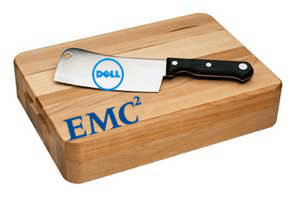
chopping-block-Dell-EMC

Watching a real butcher work is akin to watching a surgeon. They are experts with their tools, which are cleavers and knives instead of scalpels and stitches. They know how to carve the best cut of meat from a formless lump. And they do it with the expert eye of a professional trained in their trade.

Butcher is a term that is often loaded with all manner of negative connotations. It makes readers think of indiscriminate slaughter and haphazard destruction. But the real truth is that a butcher requires time and training to cut as they do. There is nothing that a butcher does that isn’t calculated and careful.

Quick Cuts

Why all the discussion about butchers? Because you’re going to see a lot more comparisons in the future when people talk about the pending Dell/EMC acquisition. The real indiscriminate cutting has already started. EMC hid an undisclosed number of layoffs in a Dec. 31 press release. VMware is going to take a 5% hit in jobs, including the entire Workstation and Fusion teams.

It’s no secret that the deal is in trouble right now. Investors are cringing at some of the provisions. The Virtustream spin out was rescinded after backlash. The tracking stock created to creatively dodge some tax issues is now so low that it needs a ladder to tickle a snake’s belly. Every news day brings another challenge to the deal that is more likely to sink it than to save it.

In order to meet this rising tide of disillusionment, Dell and EMC are pulling out all the stops. Expect to see more ham-handed decisions in the future, like cashiering entire teams and divisions in order to get under some magical number that investors like and will be willing to support in order to make this mega merger happen. Given Michael Dell’s comments about investors during his run to make Dell a private company, I’m sure he probably has a very sour taste in his mouth thanks to all this.

Butchers work to make the best possible product from the raw materials given. There are no second chances. No do-overs. You have to get it right the first time. That very reason is why all this scrambling looks more like the throes of a desperate gambit instead of a sound merger strategy.

Prime Cuts

All companies that merge have duplicate jobs. It’s a fact of business. Much of the job overlap comes in the administrative side of the house. Legal, accounts, and management teams all have significant overlap no matter where you go. And while those teams are important for keeping the lights on and getting the bills paid, the positions represent redundancy that almost never gets trimmed away. Staff positions keep the machine moving. That means they stay.

Assuming that no one inside of either organization wants to cut staff positions, how can we approach something resembling more sane carving that accomplishes the same goals without leading to the hemorrhaging that will come from large-scale indiscriminate layoffs?

  1. Kill off needless products. While I’m sure this is an on-going process, there are some pretty easy targets for this one. Haven’t sold that SKU in two years? Gone. Wind down support and give a discounted upgrade to something you do support. Kill off SKUs that exists solely to win awards.
  2. Reduce products by collapsing product lines. You don’t need two entry-level products for iSCSI storage. Or five different enterprise-class arrays. Kill off the things that overlap or directly compete against each other. Who survives? The one that sells better. The one that has better tech. The one that costs less to support. If you’re going to pinch pennies in other places, you had better start doing it here too.
  3. Management reductions need to happen too. For all the talk of reducing engineering teams and creating synergy, it’s surprising how often managers escape the layoffs. They’re almost like professors with tenure. Well, it’s time for them to prove their worth too. If their department is gone, so are they. If they are an ineffective manager, pay them a severance and let them earn their role somewhere else all over again. And that goes double for the 500 CTOs that seem to have sprung up inside large organizations lately.

You’d think these things were obvious and easy to figure out. Yet these are the kinds of decisions that get overlooked during every merger.


Tom’s Take

Layoffs hurt lots of people. It’s never fun when your teammates and friends get sacked. But you can be smart about who goes and how best to make the new company survive and even thrive. Chopping away at the company with a machete is like a horror movie. People are going to scream and cry and you’ll be lucky to live through the end. Instead of taking that approach, be smart. Make the best cuts you can from what you’ve got. Find ways to package the parts no one might want with other parts that people find attractive. Do what you can to use as much as you can. Think like a professional butcher. Don’t act like an amateur one.

My Thoughts On The Death Of IP Telephony

A Candlestick Phone (image courtesy of WIkipedia)

A Candlestick Phone (image courtesy of Wikipedia)

Greg Ferro (@EtherealMind) posted a thought provoking article about collaboration in his Human Infrastructure magazine (which you should be reading). He talks about the death of IP Telephony and the rise of asynchronous communications methods like Slack. He’s got a very interesting point of view. I just happen to disagree with a few of his assertions.

IP Telephony Is Only Mostly Dead

Greg’s stance that IP Telephony is dead is a bit pointed to say the least. He is correct that the market isn’t growing. It is also true that a great number of new workers entering the workforce prefer to use their smartphones for communications, especially the asynchronous kind. However, desk phones are a huge part of corporate communications going forward.

IT shops have a stilted and bizarre world view. If you have a workforce that has to be mobile, whether it be for making service calls or going to customer sites for visits, you have a disproportionately large number of mobile users for sure. But what about organizations that don’t have large mobile populations? What about financial firms or law offices or hospitals? What about retail organizations? These businesses have specific needs for communications, especially with external customers and users.

Imagine if your pharmacy replaced their phone with a chat system? How about your doctor’s office throwing out their PBX and going to an email-only system? How would you feel about that? A couple of you might cheer because they finally “get it”. But a large number of people, especially more traditional non-technical folks, would switch providers or move their business elsewhere. That’s because some organizations rely on voice communications. For every millennial dumping their office phone to use a mobile device there is still someone they need to call on the other end.

We’re not even talking about the important infrastructure that still needs a lot of specialized communications gear. Fax machines are still a huge part of healthcare and legal work. Interactive Voice Response (IVR) systems are still crucial to handle call volumes for things like support lines. These functions can’t be replaced on mobile devices easily. You can fake IVRs and call queuing with the right setup, but faxing things to a mobile device isn’t possible.

Yes, services do exist to capture fax information as a TIFF or JPG and email it to the destination. But for healthcare and legal, this breaks confidentiality clauses and other important legal structures. The area around secure faxing via email is still a bit murky, and most of the searches you can do for the topic revolve around companies trying to tell you that it’s acceptable and okay to use (as long as you use their product).

IP Telephony isn’t far removed from buggy whip manufacturers. The oft-cited example of a cottage industry has relevance here. At some point after the introduction of the automobile, buggy whip growth slowed and eventually halted. But they didn’t go away permanently. The market did contract and still exists to this day. It’s not as big as the 13,000-strong market it once was, but it does exist today to meet a need that people still have. Likewise, IP Telephony will still have solutions to meet needs for specific customers. Perhaps we’ll contract down to two or three providers at some point in the future, but it will never really go away.

I’ll Have My People IM Your People

Contacting people is an exercise today. There are so many ways to reach someone via various communications that you have to spend time figuring out how to reach them. Direct message, Text message, Phone call, Voice Mail, Email, and smoke signals are all valid communications forms. It is true that a lot of these communications are moving toward asynchronous methods. But as mentioned above, a lot of customer-facing businesses are still voice-only.

Sales is one of these areas that is driven by sound. The best way to sell something to someone is to do it face-to-face. But a phone call is a close second. Sales works because you can use your voice to influence buyers. You can share their elation and allay their fears. You can be soothing or exciting or any range of emotion in between. That’s something you don’t get through the cold text of instant messaging or email.

It’s also much harder to ignore phone calls. Sure, you can send read receipts with emails but these are rarely implemented and even more rarely used correctly in my experience. Phone calls alert people about intent. Even ignoring or delaying them means being send to a voice mail box or to another phone in the department where your call can be dealt with. The synchronous nature of the communication means there has to be a connection with someone. You can’t just launch bytes of text into the ether and hope it gets where it’s supposed to go.

It is true that these voice communications happen via mobile numbers more often than not in this day and age. But corporations still prefer those calls to go through some kind of enterprise voice system. Those systems can track communications and be audited. Records can be subpoenaed for legal reasons without needing to involve carriers.

It’s much easier for call centers to track productivity via phone logs than seeing who is on the phone. If you’ve ever worked in a corporate call center, you know there are metrics for everything you do on the phone. Average call time, average wait time, amount of non-call time, and so on. Each of these metrics can be tracked via a desk phone with a headset, not so with a mobile phone and an app.


Tom’s Take

I live on my mobile phone. I send emails and social media updates. I talk in Slack and Skype and other instant messaging platforms. But I still get on the phone at least three times a week to talk to someone. Most of those calls take place on a conference bridge. That’s because people want to hear someone’s voice. It’s still comforting and important to listen to someone.

Doing away with IP Telephony sounds like an interesting strategy for small businesses and startups. It’s a cost-reduction method that has benefits in the short term. But as companies grow and change they will soon find that having a centralized voice system to control and manipulate calls is a necessity. Given the changes in voice technology in the last few years, I highly expect that “centralized” voice will eventually be a pay-per-seat cloud leased model with specific executives and support personnel using traditional phones while non-critical employees have no voice communications device or choose to use their personal mobile device.

IP Telephony isn’t dead. It’s not even dying. But it’s well past the age where it needs to consider retirement and a long and fulfilling life concentrating on specific people instead of trying to make everyone happy.


Keeping IT Up With The Joneses


Keeping-Up-With-The-Joneses

We’ve all been in that meeting. We’re learning the important facts about a company and their awesome technology. We think we’ve got a handle of the problem they’re solving and how we can apply it to our needs. And then…BAM! Our eyes are assaulted by a billboard full of company logos. We’re told how every one of these companies think that this product or solution is awesome. And because they think it’s awesome and bought it, you should think it’s awesome as well and buy it too.

Do As They Do

This particular exchange in a presentation has a term: the NASCAR slide. When I came up with the term years ago during a Tech Field Day presentation, I referred to the fact that the slide was covered by all of the logos of customers and sponsors, not unlike the side of a NASCAR race car or the coveralls worn by the drivers. It turned the presentation into a giant neon sign signaling all the companies that bought the solution.

Vendors love to tell you who their customers are. They love holding those solution bidding wins over their competitor’s heads and informing the populace that a company like Victoria’s Secret uses their servers or an institution like the University of Oklahoma uses their wireless access points. Even when they can’t legally say if a company uses their equipment due to some clause in a contract, you’ll see language like “a large financial firm” or “a large sports media provider”, usually with enough context for you to figure out who they’re talking about without explicitly saying it. Wink wink, nudge nudge indeed.

The problem with this kind of marketing is that it never works. I’ve conducted some informal polling both in-person and through Twitter and the response was overwhelming: IT professionals don’t make purchasing decisions based on who else bought something. It seems kind of obvious, doesn’t it? People will base a decision on things like cost or suitability to the requirements of the project. They even do it for reasons like the user interface or the code name of the project. But not one person said they bought something because of the list of companies that use it.

That’s not to say that prior purchasers don’t figure into the process. People who bought a product and have provided feedback, either through a review process or through a stream of angry tweets have influenced purchasers. People told me that they would listen to a trusted voice telling them to buy (or not buy) something based on their experience. It would seem that what customers are looking for is not a list of purchasers, but those purchasers’ opinions about the solution.

I Won’t Do What You Tell Me!

Perhaps the heart of the problem comes down to the way that consumer products are marketed. Air Jordan shoes, Rolex Watches, and expensive cars all have the same idea behind them. You, as the customer, should buy these things because other people that are famous and important have them and you want to be like them, right? Buying an expensive pair of shoes is just like buying a storage array or a data center switch, right?

Vendors need to move away from the customer name dropping and instead focus on the solutions that they provide. Talk about problems that are solved instead of mentioning that a company in a totally unrelated industry bought a few switches from you three quarters ago. The idea is to make you happy with the solution that meets your needs and not with the fact that your 20-person retail outfit is using the same data center switches that a hospital two states away is using.

If you constantly sell your solutions based on who is buying them instead of the value they bring to the organization you will eventually find out that customers are buying solutions from cloud providers based on the same rationale. It might be a bit harder to convince your customers to keep their on-premises solution once they find out that Company X went with AWS or Company Y is moving to Microsoft Azure. Because at that point any attempt to bring solution feasibility or features into the discussion is as useless as the logos on your NASCAR slide.


Tom’s Take

I blasted an executive at HPE Discover a couple of weeks ago about this very subject. I get so tired of hearing the name dropping during keynotes or sales presentations. To me, there’s no difference between saying the following:

So, I was talking to Mark Zuckerberg the other day about networking…

Or

Facebook is a great customer of ours and they love our switches.

Either way, you’re just telling people that you “run in those circles” and they should buy your gear because of it.

I would rather you sell your products based how they can help me make money or reduce costs or make my data more secure. And should I have a wild hair that I want to know who else uses your product, I can ask for a list of companies with references that can speak directly to me about it instead of hearing you drone on about how cool it was that Nike started using your analytics solution last year. Because odds are good they’re going to dump you in another two years for the next better thing.


Build Slides Are Evil


HammerAndSaw

PowerPoint is a necessary evil. No program allows us to convey as much information in a short amount of time. PowerPoint is almost a requirement for speaking in front of groups. Information can be shown in a very effective manner for audiences of five or five hundred. But PowerPoint also allows presenters to do some very silly things that impact our ability to learn.

Not Built In A Day

The biggest offense in the land of PowerPoint is the build slide. Build slides are those that have elements that must be layered together in order to show the complete picture. In some cases, build slides have complex graphic overlays with many different elements. They may have clip art overlays. But build slides can also be simple bullet points that appear one at a time in a list. The key is that all the parts of the slide must progress in series to “build” the whole thing.

Build slides look very awesome. They provide the appearance of motion and give a movie-like quality to a static presentation. And they often take up a large amount of time during the creation process. But they are almost always unnecessary.

When built properly, a slide conveys a single idea. It may have one or two supporting ideas, but overall it should be pared down to the minimum necessary to get the idea across. Having a page full of bullet points confuses and distracts the reader. It doesn’t matter whether those bullet points are unveiled all at once or sequentially. Each additional piece of information runs the risk of the entire message or idea being forgotten.

Worse yet, the elements of a build slide can be a mystery to everyone, even the presenter. How many times have you watched a presentation where a presenter gets ahead of themselves and reveals a bullet point before it’s on screen? Or perhaps the presenter lost track of how many points were on the slide?

Another strike against build slides is what happens when you’re forced to deal with them outside of presentation mode. Build slides break down when you can’t project them properly in a mode that simulates a projector. Like over a web presentation or screen sharing program. Build slides are also a bad idea when presenting on video. If your slide deck doesn’t come across well, there are options to insert slides into the video recording. But if you have build slides, those slides can’t be inserted without either using the completely built slide, which ruins the suspense of a build up, or looks crowded and complex in many cases.

One Slide At A Time

A build slide is needlessly complicated. If you have four bullet points on a slide, you have an opportunity to make each of those into a separate slide with different information conveying the idea. Like a single supporting fact or statement. Or a picture to help visual learners internalize the idea. There are a multitude of ways to make a slide stand out without pointless animation.

You’re probably thinking to yourself that adding slides to your presentation will make it longer than it needs to be. In fact, the opposite is true. By paring your deck down to a single idea per slide, you can effectively communicate that idea and move on to the next slide. If your original slide had five ideas and took five minutes to talk about, then it follows that one idea per slide spread over five slides should take the same amount of time. In a few cases, it may take less thanks to the reduction in tendency to wander through a long slide.

If you must have bullet points supporting an idea, make each of those bullet points a new slide. Just copy and paste the existing text into a new slide with a new bullet. That allows you to add to what you’ve said previously while still capturing the progression easily. You may also find that you’re adding unnecessary steps that can be removed along the way.


Tom’s Take

I don’t give presentations to amaze people with my PowerPoint skills. People come to hear me talk, not see what transitions I built between my deck. To that point, I don’t use a lot of bullets or make them fly in to wow the people reading my slides. Instead, I stick to the ideas of using lots of pictures and keeping the text short.

When you look at some of the most public presentations from well-regarded speakers, you find that they follow these same guidelines. They keep their presentations simple and focus on ideas and not text. They try to keep all members of the audience focused, but aural and visual learners. They realize that build slides don’t actually offer anything to the audience aside from showing mastery of esoteric aspects of PowerPoint wizardry. Keep it simple and build your audience’s knowledge, not your slides.


The Marriage of the Ecosystem


marriage

A recent discussion with Greg Ferro (@EtherealMind) of Packet Pushers and Nigel Poulton (@NigelPoulton) of In Tech We Trust got me thinking about product ecosystems. Nigel was talking about his new favorite topic of Docker and containers. He mentioned to us that it had him excited because it felt like the good old days of VMware when they were doing great things with the technology. That’s when I realized that ecosystems aren’t all they are cracked up to be.

Courting Technology

Technology is a huge driver for innovation. New ideas are formed into code that runs to accomplish a task. That code is then disseminated to teams and built upon to create toolsets to accomplish even more tasks. That’s how programs happen. Almost every successful shift in technology starts with the courtship of focused code designed to accomplish a simple task or solve a quick problem.

The courtship evolves over time to include other aspects of technology. Development work extends the codebase to accept things like plugins to provide additional functionality. Not core functions though. The separation comes when people want to add additional pieces without compromising the original program. Bolting additional non-core pieces on to existing code causes all kinds of headaches.

That’s how ecosystems start. People build new functions to augment and support the new problems the crop up around those solved by the original tool. Finding new problems is key to driving the ecosystem forward. Without problems to solve, the environment around a particular program starts to contract and disappear.

The Old Ball And Chain

Ecosystems eventually reach the point of stagnation, however. This usually comes when the ecosystem around a product becomes more important than the actual program itself. Think about the ecosystem around Microsoft Office. Office was originally a word processor. That drove additional programs to solve spreadsheets and presentations. Now, people buy the Office productivity suite for more than the word processor. More than a few buy it for the email program. But very little innovation is going into the word processor any longer. Aside from some UI design changes and few minor function additions the majority of the work is being driven around other programs.

This is also the problem with VMware today. The development around the original hypervisor is mostly moot. That problem has been solved completely. Today, all of the marketing hype around the VMware is on other things. Public cloud architectures. Storage virtualization. Networking virtualization. None of these things have anything to do with they hypervisor beyond tying into the ecosystem created around it.

Ecosystems can’t exist without recognizing the original problems being solved and why they are so important. If you build an environment around a product and then leave that product to wither on the vine, your ecosystem will eventually collapse. When your company pivots away from what makes it successful in the first place you run the risk of disaster.

Note that this doesn’t include what happens when the technology landscape forces you to shift your focus. Token ring networking doesn’t solve a big problem today. Companies focusing on it needed to pivot away from it to solve new problems. As such, there really isn’t a token ring ecosystem today.

Now, look at tape backup units as a counterpoint. They still solve a problem – backing up large amounts of data at low cost. Quite a few of the old tape backup vendors have moved away from the market and are concentrating on new solutions. A few of the old vendors, such as SpectraLogic, still support tape solutions and are continuing to drive the tape ecosystem with new ideas. But those ideas still manage to come back to tape. That’s how they can keep the ecosystem grounded and relevant.


Tom’s Take

New technology is like dating. You get excited and giddy about where things are going and all the potential you see. You enjoy spending time together just talking or existing. As you start to get more serious you start to see issues crop up the need to be solved. Eventually you take the plunge and make things super serious. What you don’t want to have happen at this point is the trap that some people fall into. When you concentrate on the issues that crop up around things you start to lose focus. It’s far to easy to think about bills and schools and other ancillary issues and lose sight of the reason why you’re together in the first place.

Ecosystems are like that. People start focusing on the ecosystem at the expense of the technology that brought everyone together in the first place. When you do that you forget about all the great things that happened in the beginning and you concentrate on the problems that have appeared and not the technology. In order to keep your ecosystem vibrant and relevant, you have to step back and remember the core technology from time to time.


A Voyage of Discover-E


hpe-logo

I’m very happy to be attending the first edition of Hewlett-Packard Enterprise (HPE) Discover in London next week. I say the first edition because this is the first major event being held since the reaving of HP Inc from Hewlett-Packard Enterprise. I’m hopeful for some great things to come from this.

It’s The Network (This Time)

One of the most exciting things for me is seeing how HPE is working on their networking department. With the recent news about OpenSwitch, HPE is trying to shift the way of thinking about a switch operating system in a big way. To quote my friend Chris Young:

Vendors today spend a lot of effort re-writing 80% of their code and focus on innovating on the 20% that makes them different. Imagine how much further we’d be if that 80% required no effort at all?

OpenSwitch has some great ideas, like pulling everything from Open vSwitch as a central system database. I would love to see more companies use this model going forward. It makes a lot of sense and can provide significant benefits. Time will tell if other vendors recognize this and start using portions of OpenSwitch in their projects. But for now it’s interesting to see what is possible when someone takes a leap of open-sourced faith.

I’m also excited to hear from Aruba, a Hewlett-Packard Enterprise company (Aruba) and see what new additions they’ve made to their portfolio. The interplay between Aruba and the new HPE Networking will be interesting to follow. I have seen more engagement and discussion coming from HPE Networking now that Aruba has begun integrating themselves into the organization. It’s exciting to have conversations with people involved in the vendor space about what they’re working on. I hope this trend continues with HPE in all areas and not just networking.

Expected To Do Your Duty

HPE is sailing into some very interesting waters. Splitting off the consumer side of the brand does allow the smaller organization to focus on the important things that enterprises need. This isn’t a divestiture. It’s cell mitosis. The behemoth that was HP needed to divide to survive.

I said a couple of weeks ago:

To which it was quickly pointed out that HPE is doing just that. I agree that their effort is impressive. But this is the first time that HP has tried to cut itself to pieces. IBM has done it over and over again. I would amend my original statement to say that no company will be IBM again, including IBM. What you and I think of today as IBM isn’t what Tom Watson built. It’s the remnants of IBM Global Services with some cloud practice acquisitions. The server and PC business that made IBM a household name are gone now.

The lesson to HPE during as they try to find their identity in the new world post-cleaving is to remember what people liked about HP in the enterprise space and focus on keeping that goodwill going. Create a nucleus that allows the brand to continue to build and innovate in new and exciting ways without letting people forget what made you great in the first place.


Tom’s Take

I’m excited to see what HPE has in store for this Discover. There are no doubt going to be lots of product launches and other kinds of things to pique my interest about the direction the company is headed. I’m impressed so far with the changes and the focus back to what matters. I hope the momentum continues to grow into 2016 and the folks behind the wheel of the HPE ship know how to steer into the clear water of success. Here’s hoping for clear skies and calm seas ahead for the good ship Hewlett-Packard Enterprise!