Blogging By The Refrigerator’s Light

Blogging isn’t starting off to a good 2017 so far. Ev Williams announced that Medium is cutting back and trying to find new ways to engage readers. The platform of blogging is scaling back as clickbait headlines and other new forms of media capture the collective attention for the next six seconds. How does that all relate to the humble tech blogger?

Mindshare, Not Eyeshare

One of the reasons why things have gotten so crazy is the drive for page views. Clickbait headlines serve the singular purpose of getting someone to click on an article to register a page view. Ever clicked on some Top Ten article only to find that it’s actually a series of 10 pages in a slideshow format? Page views. I’ve even gone so far as to see an article of top 7 somethings broken down into 33(!) pages, each with 19 ads and about 14 words.

Writers competing for eyeballs are always going to lose in the end. Because the attention span of the average human doesn’t dally long enough to make a difference. Think of yourself in a crowded room. Your eyes dart back and forth and all around trying to find something in the crowd. You may not even know what you’re looking for. But you’ll know it when you see it. Your attention wanders as you scan through the crowd.

Blogging, on the other hand, is like finding a good conversation in the crowd. It engages the mind. It causes deeper thinking and engagement that leads to lasting results. The best blog posts don’t have thousands of views in the first week followed by little to nothing for the rest of eternity. They have active commenters. They have response pieces. They have page views and search results that get traffic years after publication.

The 3am Ah Ha Moments

Good blogs shouldn’t just be about “going viral”. Good blogs should have something called Fridge Brilliance. Simply put, the best blogs hit you out of the blue a day after you read it standing in front of your fridge door. BANG. Now you get it! You run off to see how it applies to what you’re doing or even to give your perspective on things.

The mark of a truly successful blog is creating something that lasts and is memorable in the minds of readers. Even if all you’re really known for is “that one post” or a series of great articles, you’ve made an impression. And, as I’ve said before, you can never tell which post is going to hit it big. So the key is to keep writing what you write and making sure you’re engaging your audience at a deeper level than their corneas.

That’s not to say that you can’t have fun with blog posts now and then or post silly things here and there. But if you really want to be known as an authoritative source of content, you have to stay consistent. One of the things that Dave Henry (@DaveMHenry) saw in his 2016 wrap-up was that his most viewed posts were all about product announcements. Those tend to get lots of headlines, but for an independent blog it’s just as much about the perspective the writer lends as it is for the news itself. That’s how you can continue to engage people beyond the eyeball and into the brain.


Tom’s Take

I’ve noticed that people still like to write. They want to share thoughts. But they pick the wrong platforms. They want eyeballs instead of minds. They don’t want deep thoughts. They just want an audience. That’s the wrong way to look at it. You want engagement. You want disagreement and argument and 4,000 word response posts about why you’re completely wrong. Because that’s how you know you’ve hooked the reader. You’re a splinter in their mind that won’t go away. That’s the real draw. Keep your page views. I’d rather have memories and fridge brilliance instead.


Bringing 2017 To Everyone

calendar

It’s time once again for my traditional New Year’s Day navel gazing. As per tradition with my blog, I’m not going to make prognostications about networking or IT in general. Either I’m going to wind up totally wrong or be totally right and no one will care. I rather enjoy the ride as we go along, so trying to guess what happens is kind of pointless.

Instead, I’m going to look at what I want to accomplish in the coming year. It gives me a chance to analyze what I’m doing and what I want to be working on. And it’s a whole lot easier than predicting that SDN is going to take everyone’s job or OpenFlow being dead again.

Write Like the Wind

My biggest goal for 2016 was to write more. And that I did. I worked in writing any time I could. I wrote about ONUG, SD-WAN, and other fun topics. I even wrote a small book! Finding time to work all the extra typing in to my Bruce Wayne job at Tech Field Day was a bit challenging here and there. And more than once I was publishing a blog post at the deadline. But all that writing did help me talk about new subjects in the industry and develop great ideas at the same time.

I also encouraged more people to write. I wanted to get people putting their thoughts down in a form that didn’t require listening or watching video. Writing is still very important and I think it’s a skill that more people should develop. My list of blogs to read every day grew in 2016 and I was very happy to see it. I hope that it continues well into 2017 as well.

King Of The Hill

2017 is going to be an exciting year for me and Tech Field Day. I ran Networking Field Day 12 as the host of the event for the first time. In the coming year, Stephen and I are going to focus on our topics areas even deeper. For me, that means immersing myself in networking and wireless technologies more than ever before. I’m going to be learning as much as I can about all the new things going on. It’s a part of the role of being the host and organizer for both Networking Field Day and Mobility Field Day coming up this year.

I’m also going to be visiting lots of other conferences. Cisco Live, Interop, and even Open Networking Summit are on my list this year. We’re going to be working closely with those shows to put on even more great Tech Field Day content. I love hearing the excitement from my friends in the industry when they learn that Tech Field Day is going to be present at a show like Cisco Live. It means that we’re reaching a great audience and giving them something that they are looking for.

We’re also going to be looking at new ideas and new things to do with our growing media presence with Gestalt IT. There should be some interesting things there on the horizon as we embrace the new way that media is used to communicate with readers and fans alike. Stay tuned there for all the excitement we’ll be bringing your way in 2017!


Tom’s Take

Analyzing a year’s worth of work helps one see progress and build toward even more goals in the coming year. I’m going to keep moving forward with the projects that excite me and challenge me to be a better representative for the networking community. Along the way I hope to learn more about what makes our technology exciting and useful. And share than knowledge with everyone I know in the best way I can. Thanks for being here with me. I hope 2017 is a great year for you as well!

Automating Your Job Away Isn’t Easy

programming

One of the most common complaints about SDN that comes from entry-level networking folks is that SDN is going to take their job away. People fear what SDN represents because it has the ability to replace their everyday tasks and put them out of a job. While this is nowhere close to reality, it’s a common enough argument that I hear it very often during Q&A sessions. How is it that SDN has the ability to ruin so many jobs? And how is it that we just now have found a way to do this?

Measure Twice

One of the biggest reasons that the automation portion of SDN has become so effective in today’s IT environment is that we can finally measure what it is that networks are supposed to be doing and how best to configure them. Think about the work that was done in the past to configure and troubleshoot networks. It’s often a very difficult task that involves a lot of intuition and guesswork. If you tried to explain to someone the best way to do things, you’d likely find yourself at a loss for words.

However, we’ve had boring, predictable standards for many years. Instead of cobbling together half-built networks and integrating them in the most obscene ways possible, we’ve instead worked toward planning and architecting things properly so they are built correctly from the ground up. No more guess work. No more last minute decisions that come back to haunt us years down the road. Those kinds of things are the basic building blocks for automation.

When something is built along the lines of predictable rules with proper adherence to standards, it’s something that can be understood by a non-human. Going all the way back to Basic Computing 101, the inputs of a system determine the outputs. More simply, Garbage In, Garbage Out. If your network configuration looks like a messy pile of barely operational commands it will only really work when a human can understand what’s going on. Machines don’t guess. They do exactly what they are told to do. Which means that they tend to break when the decisions aren’t clear.

Cut Once

When a system, script, or program can read inputs and make procedural decisions on those inputs, you can make some very powerful things happen. Provided, that is, that your chosen language is powerful enough to do those things. I’m reminded of a problem I worked on fifteen years ago during my internship at IBM. I needed to change the MTU size for a network adapter in the Windows 2000 registry. My programming language of choice wasn’t powerful enough for me to say something like, “Read these values into an array and change the last 2 or 3 to the following MTU”. So instead, I built a nested if statement that was about 15 levels deep to ensure I caught every possible permutation of the adapter binding order. It was messy. It was ugly. And it worked. But there was no way it would scale.

The most important thing to realize about SDN and automation is that we’ve moved past simply understanding basic values. We’ve finally graduated to a place where programs can make complex decisions based on a number of inputs. We’ve graduated from simple if-then-else constructs and up to a point where programs can take a number of inputs and make decisions based on them. Sure, in many cases the inputs are simple little things like tags or labels. But what we’re gaining is the ability to process more and more of those labels. We can create provisioning scripts that ensure that prod never talks to dev. We can automate turn-up of a new switch with multiple VLANs on different ports through the use of labels and object classes. We can even extrapolate this to a policy-based network language that we can use to build a task once and execute it over and over again on different hardware because we’re doing higher level processing instead of being hamstrung by specific device syntax.

Automation is going to cost some people their jobs. That’s a given. Just like every other manufacturing position, the menial tasks of assembling simple pieces or performing repetitive tasks can easily be accomplished by a machine or software construct. But writing those programs and working on those machines is a new kind of job in and of itself. A humorous anecdote from the auto industry says that the introduction of robots onto assembly lines caused many workers to complain and threaten to walk off the job. However, one worker picked up the manual for the robot and realized that he could easily start working on the it instead of the assembly line.


Tom’s Take

Automation isn’t a magic bullet to fix all your problems. It only works if things are ordered and structured in such a way that you can predictably repeat tasks over and over. And it’s not going to stop with one script or process. You need to continue to build, change, and extend your environment. Which means that your job of programming switches should now be looked at in light of building the programs that program switches. Does it mean that you need to forget the basics of networking? No, but it does mean that they way in which you think about them will change.

Is It Really Always The Network?

Keep Calm and Blame the Network

Image from Thomas LaRock

I had a great time over the last month writing a series of posts with my friend John Herbert (@MrTugs) over on the SolarWinds Geek Speak Blog. You can find the first post here. John and I explored the idea that people are always blaming the network for a variety of issues that are often completely unrelated to the actual operation of the network. It was fun writing some narrative prose for once, and the feedback we got was actually pretty awesome. But I wanted to take some time to explain the rationale behind my madness. Why is it that we are always blaming the network?!?

Visibility Is Vital

Think about all the times you’ve been working on an application and things start slowing down. What’s the first thing you think of? If it’s a standalone app, it’s probably some kind of processing lag or memory issues. But if that app connects to any other thing, whether it be a local network or a remote network via the Internet, the first culprit is the connection between systems.

It’s not a large logical leap to make. We have to start by assuming the the people that made the application knew what they were doing. If hundreds of other people aren’t having this problem, it must not be with the application, right? We’ve already started eliminating the application as the source of the issues even before we start figuring out what went wrong.

People will blame the most visible part of the system for issues. If that’s a standalone system sealed off from the rest of the world, it obviously must be the application. However, we don’t usually build these kinds of walled-off systems any longer. Almost every application in existence today requires a network connection of some kind. Whether it’s to get updates or to interact with other data or people, the application needs to talk to someone or maybe even everyone.

I’ve talked before about the need to make the network more of a “utility”. Part of the reason for this is that it lowers the visibility of the network to the rest of the IT organization. Lower visibility means fewer issues being incorrectly blamed on the network. It also means that the network is going to be doing more to move packets and less to fix broken application issues.

Blame What You Know

If your network isn’t stable to begin with, it will soon become the source of all issues in IT even if the network has nothing to do with the app. That’s because people tend to identify problem sources based on their own experience. If you are unsure of that, work on a consumer system helpdesk sometime and try and keep track of the number of calls that you get that were caused by “viruses” even if there’s no indication that this is a virus related issue. It’s staggering.

The same thing happens in networking and other enterprise IT. People only start troubleshooting problems from areas of known expertise. This usually breaks down by people shouting out solutions like, “I saw this once so it must be that! I mean, the symptoms aren’t similar and the output is totally different, but it must be that because I know how to fix it!”

People get uncomfortable when they are faced with troubleshooting something unknown to them. That’s why they fall back on familiar things. And if they constantly hear how the network is the source of all issues, guess what the first thing to get blamed is going to be?

Network admins and engineers have to fight a constant battle to disprove the network as the source of issues. And for every win they get it can come crashing down when the network is actually the problem. Validating the fears of the users is the fastest way to be seen as the issue every time.

Mean Time To Innocence

As John and I wrote the pieces for SolarWinds, what we wanted to show is that a variety of issues can look like network things up front but have vastly different causes behind the scenes. What I felt was very important for the piece was the distinguish the the main character, Amanda, go beyond the infamous Mean Time To Innocence (MTTI) metric. In networking, we all too often find ourselves going so far as to prove that it’s not the network and then leave it there. As soon as we’re innocent, it’s done.

Cross-function teams and other DevOps organizations don’t believe in that kind of boundary. Lines between silos blur or are totally absent. That means that instead of giving up once you prove it’s not your problem, you need to work toward fixing what’s at issue. Fix the problem, not the blame. If you concentrate on fixing the problems, it will soon become noticeable that networking team may not always be the problem. Even if the network is at fault, the network team will work to fix it and any other issues that you see.


Tom’s Take

I love the feedback that John and I have gotten so far on the series we wrote. Some said it feels like a situation they’ve been in before. Others have said that they applaud the way things were handled. I know that the narrative allows us to bypass some of the unsavory things that often happen, like argument and political posturing inside an organization to make other department heads look bad when a problem strikes. But what we really wanted to show is that the network is usually the first to get blamed and the last to keep its innocence in a situation like this.

We wanted to show that it’s not always the network. And the best way for you to prove that in your own organization is to make sure the network isn’t just innocent, but helpful in solving as many problems as possible.

Is The Rise Of SD-WAN Thanks To Ethernet?

Ethernet

SD-WAN has exploded in the market. Everywhere I turn, I see companies touting their new strategy for reducing WAN complexity, encrypting data in flight, and even doing analytics on traffic to help build QoS policies and traffic shaping for critical links. The first demo I ever watched for SDN was a WAN routing demo that chose best paths based on cost and time-of-day. It was simple then, but that kind of thinking has exploded in the last 5 years. And it’s all thanks to our lovable old friend, Ethernet.

Those Old Serials

When I started in networking, my knowledge was pretty limited to switches and other layer 2 devices. I plugged in the cables, and the things all worked. As I expanded up the OSI model, I started understanding how routers worked. I knew about moving packets between different layer 3 areas and how they controlled broadcast storms. This was also around the time when layer 3 switching was becoming a big thing in the campus. How was I supposed to figure out the difference between when I should be using a big router with 2-3 interfaces versus a switch that had lots of interfaces and could route just as well?

The key for me was media types. Layer 3 switching worked very well as long as you were only connecting Ethernet cables to the device. Switches were purpose built for UTP cable connectivity. That works really well for campus networks with Cat 5/5e/6 cabling. Switched Virtual Interfaces (SVIs) can handle a large amount of the routing traffic.

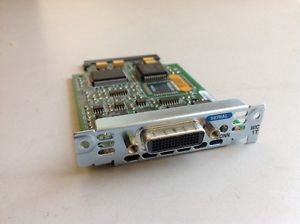
For WAN connectivity, routers were a must. Because only routers were modular in a way that accepted cards for different media types. When I started my journey on WAN connectivity, I was setting up T1 lines. Sometimes they had an old-fashioned serial connector like this:

s-l300

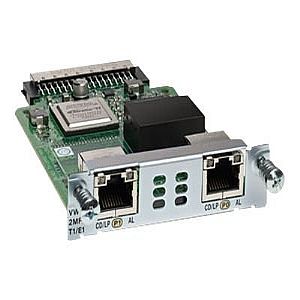
Those connected to external CSU/DSU modules. Those were a pain to configure and had multiple points of failure. Eventually, we moved up in the world to integrated CSU/DSU modules that looked like this:

ehwic-2-ports-t-1-e-1

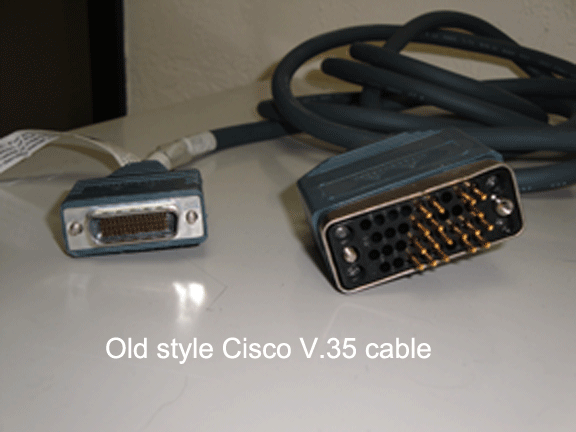
Those are really awesome because all the configuration is done on the interface. They also take regular UTP cables instead of those crazy V.35 monsters.

cisco_v35_old_large

But those UTP cables weren’t Ethernet. Those were still designed to be used as serial connections.

It wasn’t until the rise of MPLS circuits and Transparent LAN services that Ethernet became the dominant force in WAN connectivity. I can still remember turning up my first managed circuit and thinking, “You mean I can use both FastEthernet interfaces? No cards? Wow!”.

Today, Ethernet dominates the landscape of connectivity. Serial WAN interfaces are relegated to backwater areas where you can’t get “real WAN connectivity”. And in most of those cases, the desire to use an old, slow serial circuit can be superseded by a 4G/LTE USB modem that can be purchased from almost any carrier. It would appear that serial has joined the same Heap of History as token ring, ARCnet, and other venerable connectivity options.

Rise, Ethernet

The ubiquity of Ethernet is a huge boon to SD-WAN vendors. They no longer have to create custom connectivity options for their appliances. They can provide 3-4 Ethernet interfaces and 2-3 USB slots and cover a wide range of options. This also allows them to simplify their board designs. No more modular chassis. No crazy requirements for WIC slots, NM slots, or any other crazy terminology that Cisco WAN engineers are all too familiar with.

Ethernet makes sense for SD-WAN vendors because they aren’t concerned with media types. All their intelligence resides in the software running on the box. They’d rather focus on creating automatic certificate-based IPsec VPNs than figuring out the clock rate on a T1 line. Hardware is not their end goal. It is much easier to order a reference board from Intel and plug it into a box than trying to configure a serial connector and make a custom integration.

Even SD-WAN vendors that are chasing after the service provider market are benefitting from Ethernet ubiquity. Service providers may still run serial connections in their networks, but management of those interfaces at the customer side is a huge pain. They require specialized technical abilities. It’s expensive to manage and difficult to troubleshoot remotely. Putting Ethernet handoffs at the CPE side makes life much easier. In addition, making those handoffs Ethernet makes it much easier to offer in-line service appliances, like those of SD-WAN vendors. It’s a good choice all around.

Serial connectivity isn’t going away any time soon. It fills an important purpose for high-speed connectivity where fiber isn’t an option. It’s also still a huge part of the install base for circuits, especially in rural areas or places where new WAN circuits aren’t easily run. Traditional routers with modular interfaces are still going to service a large number of customers. But Ethernet connectivity is quickly growing to levels where it will eclipse these legacy serial circuits soon. And the advantage for SD-WAN vendors can only grow with it.


Tom’s Take

Ethernet isn’t the only reason SD-WAN has succeeded. Ease of use, huge feature set, and flexibility are the real reasons when SD-WAN has moved past the concept stage and into deployment. WAN optimization now has SD-WAN components. Service providers are looking to offer it as a value added service. SD-WAN has won out on the merits of the technology. But the underlying hardware and connectivity was radically simplified in the last 5-7 years to allow SD-WAN architects and designers to focus on the software side of things instead of the difficulties of building complicated serial interfaces. SD-WAN may not owe it’s entire existence to Ethernet, but it got a huge push in the right direction for sure.

HPE Networking: Past, Present, and Future

hpe_pri_grn_pos_rgb

I had the chance to attend HPE Discover last week by invitation from their influencer team. I wanted to see how HPE Networking had been getting along since the acquisition of Aruba Networks last year. There have been some moves and changes, including a new partnership with Arista Networks announced in September. What follows is my analysis of HPE’s Networking portfolio after HPE Discover London and where they are headed in the future.

Campus and Data Center Divisions

Recently, HPE reorganized their networking division along two different lines. The first is the Aruba brand that contains all the wireless assets along with the campus networking portfolio. This is where the campus belongs. The edge of the network is an ever-changing area where connectivity is king. Reallocating the campus assets to the capable Aruba team means that they will do the most good there.

The rest of the data center networking assets were loaded into the Data Center Infrastructure Group (DCIG). This group is headed up by Dominick Wilde and contains things like FlexFabric and Altoline. The partnership with Arista rounds out the rest of the switch portfolio. This helps HPE position their offerings across a wide range of potential clients, from existing data center infrastructure to newer cloud-ready shops focusing on DevOps and rapid application development.

After hearing Dom Wilde speak to us about the networking portfolio goals, I think I can see where HPE is headed going forward.

The Past: HPE FlexFabric

As Dom Wilde said during our session, “I have a market for FlexFabric and can sell it for the next ten years.” FlexFabric represents the traditional data center networking. There is a huge market for existing infrastructure for customers that have made a huge investment in HPE in the past. Dom is absolutely right when he says the market for FlexFabric isn’t going to shrink the foreseeable future. Even though the migration to the cloud is underway, there are a significant number of existing applications that will never be cloud ready.

FlexFabric represents the market segment that will persist on existing solutions until a rewrite of critical applications can be undertaken to get them moved to the cloud. Think of FlexFabric as the vaunted buggy whip manufacturer. They may be the last one left, but for the people that need their products they are the only option in town. DCIG may have eyes on the future, but that plan will be financed by FlexFabric.

The Present: HPE Altoline

Altoline is where HPE was pouring their research for the past year. Altoline is a product line that benefits from the latest in software defined and webscale technologies. It is technology that utilizes OpenSwitch as the operating system. HPE initially developed OpenSwitch as an open, vendor-neutral platform before turning it over to the Linux Foundation this summer to run with development from a variety of different partners.

Dom brought up a couple of great use cases for Altoline during our discussion that struck me as brilliant. One of them was using it as an out-of-band monitoring solution. These switches don’t need to be big or redundant. They need to have ports and a management interface. They don’t need complexity. They need simplicity. That’s where Altoline comes into play. It’s never going to be as complex as FlexFabric or as programmable as Arista. But it doesn’t have to be. In a workshop full of table saw and drill presses, Altoline is a basic screwdriver. It’s a tool you can count on to get the easy jobs done in a pinch.

The Future: Arista

The Arista partnership, according to Dom Wilde, is all about getting ready for the cloud. For those customers that are looking at moving workloads to the cloud or creating a hybrid environment, Arista is the perfect choice. All of Arista’s recent solution sets have been focused on providing high-speed, programmable networking that can integrate a number of development tools. EOS is the most extensible operating system on the market and is a favorite for developers. Positioning Arista at the top of the food chain is a great play for customers that don’t have a huge investment in cloud-ready networking right now.

The question that I keep coming back to is…when does this Arista partnership become an acquisition? There is a significant integration between the two companies. Arista has essentially displaced the top of the line for HPE. How long will it take for Arista to make the partnership more permanent? I can easily foresee HPE making a play for the potential revenues produced by Arista and the help they provide moving things to the cloud.


Tom’s Take

I was the only networking person at HPE Discover this year because the HPE networking story has been simplified quite a bit. On the one hand, you have the campus tied up with Aruba. They have their own story to tell in a different area early next year. On the other hand, you have the simplification of the portfolio with DCIG and the inclusion of the Arista partnership. I think that Altoline is going to find a niche for specific use cases but will never really take off as a separate platform. FlexFabric is in maintenance mode as far as development is concerned. It may get faster, but it isn’t likely to get smarter. Not that it really needs to. FlexFabric will support legacy architecture. The real path forward is Arista and all the flexibility it represents. The question is whether HPE will try to make Arista a business unit before Arista takes off and becomes too expensive to buy.

Disclaimer

I was an invited guest of HPE for HPE Discover London. They paid for my travel and lodging costs as well as covering event transportation and meals. They did not ask for nor were they promised any kind of consideration in the coverage provided here. The opinions and analysis contained in this article represent my thoughts alone.

OpenFlow Is Dead. Long Live OpenFlow.

The King Is Dead - Long Live The King

Remember OpenFlow? The hammer that was set to solve all of our vaguely nail-like problems? Remember how everything was going to be based on OpenFlow going forward and the world was going to be a better place? Or how heretics like Ivan Pepelnjak (@IOSHints) that dared to ask questions about scalability or value of application were derided and laughed at? Yeah, good times. Today, I stand here to eulogize OpenFlow, but not to bury it. And perhaps find out that OpenFlow has a much happier life after death.

OpenFlow Is The Viagra Of Networking

OpenFlow is not that much different than Sildenafil, the active ingredient in Vigara. Both were initially developed to do something that they didn’t end up actually solving. In the case of Sildenafil, it was high blood pressure. The “side effect” of raising blood pressure in a specific body part wasn’t even realized until after the trials of the drug. The side effect because the primary focus of the medication that was eventually developed into a billion dollar industry.

In the same way, OpenFlow failed at its stated mission of replacing the forwarding plane programming method of switches. As pointed out by folks like Ivan, it had huge scalability issues. It was a bit clunky when it came to handling flow programming. The race from 1.0 to 1.3 spec finalization left vendors in the dust, but the freeze on 1.3 for the past few years has really hurt innovation. Objectively, the fact that almost no major shipping product uses OpenFlow as a forwarding paradigm should be evidence of it’s failure.

The side effect of OpenFlow is that it proved that networking could be done in software just as easily as it could be done in hardware. Things that we thought we historically needed ASICs and FPGAs to do could be done by a software construct. OpenFlow proved the viability of Software Defined Networking in a way that no one else could. Yet, as people abandoned it for other faster protocols or rewrote their stacks to take advantage of other methods, OpenFlow did still have a great number of uses.

OpenFlow Is a Garlic Press, Not A Hammer

OpenFlow isn’t really designed to solve every problem. It’s not a generic tool that can be used in a variety of situations. It has some very specific use cases that it does excel at doing, though. Think more like a garlic press. It’s a use case tool that is very specific for what it does and does that thing very well.

This video from Networking Field Day 13 is a great example of OpenFlow being used for a specific task. NEC’s flavor of OpenFlow, ProgrammableFlow, is used on conjunction with higher layer services like firewalls and security appliances to mitigate the spread of infections. That’s a huge win for networking professionals. Think about how hard it would be to track down these systems in a network of thousands of devices. Even worse, with the level of virulence of modern malware, it doesn’t take long before the infected system has infected others. It’s not enough to shut down the payload. The infection behavior must be removed as well.

What NEC is showing is the ultimate way to stop this from happening. By interrogating the flows against a security policy, the flow entries can be removed from switches across the network or have deny entries written to prevent communications. Imagine being able to block a specific workstation from talking to anything on the network until it can be cleaned. And have that happen automatically without human interaction. What if a security service could get new malware or virus definitions and install those flow entries on the fly? Malware could be stopped before it became a problem.

This is where OpenFlow will be headed in the future. It’s no longer about adapting the problems to fit the protocol. We can’t keep trying to frame the problem around how much it resembles a nail just so we can use the hammer in our toolbox. Instead, OpenFlow will live on as a point protocol in a larger toolbox that can do a few things really well. That means we’ll use it when we need to and use a different tool when needed that better suits the problem we’re actually trying to solve. That will ensure that the best tool is used for the right job in every case.


Tom’s Take

OpenFlow is still useful. Look at what Coho Data is using it for. Or NEC. Or any one of a number of companies that are still developing on it. But the fact that these companies have put significant investment and time into the development of the protocol should tell you what the larger industry thinks. They believe that OpenFlow is a dead end that can’t magically solve the problems they have with their systems. So they’ve moved to a different hammer to bang away with. I think that OpenFlow is going to live a very happy life now that people are leaving it to solve the problems it’s good at solving. Maybe one day we’ll look back on the first life of OpenFlow not as a failure, but instead as the end of the beginning of it become what it was always meant to be.

Nutanix and Plexxi – An Affinity to Converge

nutanix-logo

Nutanix has been lighting the hyperconverged world on fire as of late. Strong sales led to a big IPO for their stock. They are in a lot of conversations about using their solution in place of large traditional virtualization offerings that include things like blade servers or big boxes. And even coming off the recent Nutanix .NEXT conference there were some big announcements in the networking arena to help them complete their total solution. However, I think Nutanix is missing a big opportunity that’s right in front of them.

I think it’s time for Nutanix to buy Plexxi.

Software Says

If you look at the Nutanix announcements around networking from .NEXT, they look very familiar to anyone in the server space. The highlights include service chaining, microsegmentation, and monitoring all accessible through an API. If this sounds an awful lot like VMware NSX, Cisco ACI, or any one of a number of new networking companies then you are in the right mode of thinking as far as Nutanix is concerned.

SDN in the server space is all about overlay networking. Segmentation of flows and service chaining are the reason why security is so hard to do in the networking space today. Trying to get traffic to behave in a certain way drives networking professionals nuts. Monitoring all of that to ensure that you’re actually doing what you say you’re doing just adds complexity. And the API is the way to do all of that without having to walk down to the data center to console into a switch and learn a new non-Linux CLI command set.

SDN vendors like VMware and Cisco ACI would naturally have jumped onto these complaints and difficulties in the networking world and both have offered solutions for them with their products. For Nutanix to have bundled solutions like this into their networking offering is no accident. They are looking to battle VMware head-to-head and need to offer the kind of feature parity that it’s going to take a make medium to large shops shift their focus away from the VMware ecosystem and take a long look at what Nutanix is offering.

In a way, Nutanix and VMware are starting to reinforce the idea that the network isn’t a magical realm of protocols and tricks that make applications work. Instead, it’s a simple transport layer between locations. For instance, Amazon doesn’t rely on the magic of the interstate system to get your packages from the distribution center to your home. Instead, the interstate system is just a transport layer for their shipping overlays – UPS, FedEX, and so on. The overlay is where the real magic is happening.

Nutanix doesn’t care what your network looks like. They can do almost everything on top of it with their overlay protocols. That would seem to suggest that the focus going forward should be to marginalize or outright ignore the lower layers of the network in favor of something that Nutanix has visibility into and can offer control and monitoring of. That’s where the Plexxi play comes into focus.

Plexxi Logo

Affinity for Awesome

Plexxi has long been a company in search of a way to sell what they do best. When I first saw them years ago, they were touting their Affinities idea as a way to build fast pathways between endpoints to provide better performance for applications that naturally talked to each other. This was a great idea back then. But it quickly got overshadowed by the other SDN solutions out there. It even caused Plexxi to go down a slightly different path for a while looking at other options to compete in a market that they didn’t really have a perfect fit product.

But the Affinities idea is perfect for hyperconverged solutions. Companies like Nutanix are marking their solutions as the way to create application-focused compute nodes on-site without the need to mess with the cloud. It’s a scalable solution that will eventually lead to having multiple nodes in the future as your needs expand. Hyperconverged was designed to be consumable per compute unit as opposed to massively scaling out in leaps and bounds.

Plexxi Affinities is just the tip of the iceberg. Plexxi’s networking connectivity also gives Nutanix the ability to build out a high-speed interconnect network with one advantage – noninterference. I’m speaking about what happens when a customer needs to add more networking ports to support this architecture. They need to make a call to their Networking Vendor of Choice. In the case of Cisco, HPE, or others, that call will often involve a conversation about what they’re doing with the new network followed by a sales pitch for their hyperconverged solution or a partner solution that benefits both companies. Nutanix has a reputation for being the disruptor in traditional IT. The more they can keep their traditional competitors out of the conversation, the more likely they are to keep the business into the future.


Tom’s Take

Plexxi is very much a company with an interesting solution in need of a friend. They aren’t big enough to really partner with hyperconverged solutions, and most of the hyperconverged market at this point is either cozy with someone else or not looking to make big purchases. Nutanix has the rebel mentality. They move fast and strike quickly to get their deals done. They don’t take prisoners. They look to make a splash and get people talking. The best way to keep that up is to bundle a real non-software networking component alongside a solution that will make the application owners happy and keep the conversation focused on a single source. That’s how Cisco did it back and the day and how VMware has climbed to the top of the virtualization market.

If Nutanix were to spend some of that nice IPO money on a Plexxi Christmas present, I think 2017 would be the year that Nutanix stops being discussed in hushed whispers and becomes a real force to be reckoned with up and down the stack.

Visibility In Networking – Quick Thoughts from Networking Field Day

nfd-logo

I’m at Networking Field Day 13 this week. You can imagine how much fun I’m having with my friends! I wanted to drop some quick thoughts on visibility for this week on you all about what we’re hearing and raise some interesting questions.

I Can See Clearly Now

Visibility is a huge issue for companies. Seeing what’s going on is hard for people. Companies like Ixia talk about the need to avoid dropping any packets to make sure we have complete knowledge of the network. But that requires a huge amount of hardware and design. You’re always going to need traditional monitoring even when everything is using telemetry and other data models. Make sure you size things right.

Forward Networks told us that there is an increasing call for finding a way to monitor both the underlay network and the overlay network. Most overlay companies give you a way to tie into their system via API or other telemetry. However, there is no visibility into the underlay because of the event horizon. Likewise, companies like Forward Networks are focusing on the underlay with mapping technologies and modeling software but they can’t pass back through the event horizon to see into the overlay. Whoever ends up finding a way to marry both of these together is going to make a lot of money.

Apstra is taking the track of not caring what the underlay looks like. They’re going to give you the tools to manage it all without hard setup. You can rip and replace switches as needed with multivendor support. That’s a huge win if you run a heterogeneous network or you’re looking to start replacing traditional hardware with white or bright box options. Likewise, their ability to pull configs can help you visualize your device setup more effectively no matter what’s under there.


Tom’s Take

I’ve got some more Networking Field Day thoughts coming soon, but I wanted to get some thoughts out there for you to think about this weekend. Stay tuned for some new ideas coming out of the event!

How To Ask A Question At A Conference

question-mark-706906_1280

The last time you went to a conference, did you ask any questions? Were you curious about a technology and wanted to know more? Was there something that you didn’t quite get and needed an explanation? Congratulations. You’re in a quiet group of people that ask questions for knowledge. More and more, we are seeing questions becoming a vehicle for more than just knowledge acquisition. If you want to learn how to ask a proper question at a conference, read on.

1. Have A Question

I know it goes without saying, but if you’re going to raise your hand at a conference to ask a question, you should actually have a question in mind. Some people grab a microphone without thinking through what they’re going to say. This leads to stammering and broken thoughts that usually culminate in a random question mark here or there. This makes it difficult for the speaker to figure out what you’re trying to ask.

If you’re going to raise your hand, jot some notes down first. Bullet points help as does making a note or two. This is especially true if the speaker is answering questions before yours. If they answer part of your question before you get to ask it, you may have to reframe your thoughts. It never hurts to have an idea of what you’re going to say before you say it.

2. Look For Knowledge, Not To Make A Statement

The other side of the coin from the above recommendation of actually having a question is to make sure that what you’re asking is actually a question and not a statement. A great example of this is a video from Scott Bradner during a recent ONUG meeting:

I’m sure Scott has seen his fair share of statements masquerading as questions during his time. And I can’t disagree with him. Far too often, people seeking questions aren’t really asking to get information. Instead, they are trying to make a point about why they think they are right or why they disagree with the speaker. The point stops becoming a question and more of a soliloquy or soapbox. The most egregious will usually end this rant with an actual question along the lines of, “So, what do you think of my opinion?”

Please, at all costs, avoid this behavior. This is singularly the most annoying thing a speaker has to deal with. It’s enough to be questioned on your material, but it’s something else entirely to have to shift your thinking to someone else’s viewpoint while on stage. If you have a point you’d like to bring up with the speaker that is contrary to their thought process, you should do it after the presentation without people watching. Have a discussion and express opinions there. Don’t grandstand in front of the crowd just to satisfy your ego.

theres-no-question-youre-clever

3. Make Sure Your Question Wasn’t Already Answered.

This one’s a bit tougher. If you’re sitting in a session and you have a question, it’s important to make sure it wasn’t already asked and answered beforehand. This can be tougher if you have to duck out to take a call or you miss a section of the presentation. In these cases, you can ask for clarification or additional information but it would be better to ask after the session. Audiences tend to get a bit irritated if someone asks a question that was previously answered or that was covered earlier.

This one is probably the most forgivable of the question faux pas. People at conferences know that ducking out to deal with things is more common now. But if you are going to ask a question because you missed something, please make sure to address then when you ask. That helps everyone get the frame of reference for why you’re asking it. That will keep the audience on your side and less likely to boo you.


Tom’s Take

I ask lots of questions. I also answer them. And nothing irritates me more than having to deal with someone making a point during Q&A to try and make them look smarter than me. I get it. I have a hatred of keynotes and other speeches with no ability to get feedback. But at the same time, as Scott Bradner says above, the focus of the presentation is about the people presenting. It’s about the people doing the work and sharing the ideas. If you want to use Q&A time to pontificate about your position, then you need to volunteer to be a speaker.