
HPE Networking: Past, Present, and Future

hpe_pri_grn_pos_rgb

I had the chance to attend HPE Discover last week by invitation from their influencer team. I wanted to see how HPE Networking had been getting along since the acquisition of Aruba Networks last year. There have been some moves and changes, including a new partnership with Arista Networks announced in September. What follows is my analysis of HPE’s Networking portfolio after HPE Discover London and where they are headed in the future.

Campus and Data Center Divisions

Recently, HPE reorganized their networking division along two different lines. The first is the Aruba brand that contains all the wireless assets along with the campus networking portfolio. This is where the campus belongs. The edge of the network is an ever-changing area where connectivity is king. Reallocating the campus assets to the capable Aruba team means that they will do the most good there.

The rest of the data center networking assets were loaded into the Data Center Infrastructure Group (DCIG). This group is headed up by Dominick Wilde and contains things like FlexFabric and Altoline. The partnership with Arista rounds out the rest of the switch portfolio. This helps HPE position their offerings across a wide range of potential clients, from existing data center infrastructure to newer cloud-ready shops focusing on DevOps and rapid application development.

After hearing Dom Wilde speak to us about the networking portfolio goals, I think I can see where HPE is headed going forward.

The Past: HPE FlexFabric

As Dom Wilde said during our session, “I have a market for FlexFabric and can sell it for the next ten years.” FlexFabric represents the traditional data center networking. There is a huge market for existing infrastructure for customers that have made a huge investment in HPE in the past. Dom is absolutely right when he says the market for FlexFabric isn’t going to shrink the foreseeable future. Even though the migration to the cloud is underway, there are a significant number of existing applications that will never be cloud ready.

FlexFabric represents the market segment that will persist on existing solutions until a rewrite of critical applications can be undertaken to get them moved to the cloud. Think of FlexFabric as the vaunted buggy whip manufacturer. They may be the last one left, but for the people that need their products they are the only option in town. DCIG may have eyes on the future, but that plan will be financed by FlexFabric.

The Present: HPE Altoline

Altoline is where HPE was pouring their research for the past year. Altoline is a product line that benefits from the latest in software defined and webscale technologies. It is technology that utilizes OpenSwitch as the operating system. HPE initially developed OpenSwitch as an open, vendor-neutral platform before turning it over to the Linux Foundation this summer to run with development from a variety of different partners.

Dom brought up a couple of great use cases for Altoline during our discussion that struck me as brilliant. One of them was using it as an out-of-band monitoring solution. These switches don’t need to be big or redundant. They need to have ports and a management interface. They don’t need complexity. They need simplicity. That’s where Altoline comes into play. It’s never going to be as complex as FlexFabric or as programmable as Arista. But it doesn’t have to be. In a workshop full of table saw and drill presses, Altoline is a basic screwdriver. It’s a tool you can count on to get the easy jobs done in a pinch.

The Future: Arista

The Arista partnership, according to Dom Wilde, is all about getting ready for the cloud. For those customers that are looking at moving workloads to the cloud or creating a hybrid environment, Arista is the perfect choice. All of Arista’s recent solution sets have been focused on providing high-speed, programmable networking that can integrate a number of development tools. EOS is the most extensible operating system on the market and is a favorite for developers. Positioning Arista at the top of the food chain is a great play for customers that don’t have a huge investment in cloud-ready networking right now.

The question that I keep coming back to is…when does this Arista partnership become an acquisition? There is a significant integration between the two companies. Arista has essentially displaced the top of the line for HPE. How long will it take for Arista to make the partnership more permanent? I can easily foresee HPE making a play for the potential revenues produced by Arista and the help they provide moving things to the cloud.


Tom’s Take

I was the only networking person at HPE Discover this year because the HPE networking story has been simplified quite a bit. On the one hand, you have the campus tied up with Aruba. They have their own story to tell in a different area early next year. On the other hand, you have the simplification of the portfolio with DCIG and the inclusion of the Arista partnership. I think that Altoline is going to find a niche for specific use cases but will never really take off as a separate platform. FlexFabric is in maintenance mode as far as development is concerned. It may get faster, but it isn’t likely to get smarter. Not that it really needs to. FlexFabric will support legacy architecture. The real path forward is Arista and all the flexibility it represents. The question is whether HPE will try to make Arista a business unit before Arista takes off and becomes too expensive to buy.

Disclaimer

I was an invited guest of HPE for HPE Discover London. They paid for my travel and lodging costs as well as covering event transportation and meals. They did not ask for nor were they promised any kind of consideration in the coverage provided here. The opinions and analysis contained in this article represent my thoughts alone.

Apple Watch Unlock, 802.11ac, and Time

applewatchface

One of the benefits of upgrading to MacOS 10.12 Sierra is the ability to unlock my Mac laptop with my Apple Watch. Yet I’m not able to do that. Why? Turns out, the answer involves some pretty cool tech.

Somebody’s Watching You

The tech specs list the 2013 MacBook and higher as the minimum model needed to enable Watch Unlock on your Mac. You also need a few other things, like Bluetooth enabled and a Watch running WatchOS 3. I checked my personal MacBook against the original specs and found everything in order. I installed Sierra and updated all my other devices and even enabled iCloud Two-Factor Authentication to be sure. Yet, when I checked the Security and Privacy section, I didn’t see the checkbox for the Watch Unlock to be enabled. What gives?

It turns out that Apple quietly modified the minimum specs during the Sierra beta period. Instead of early 2013 MacBooks being support, the shift moved support to mid-2013 MacBooks instead. I checked the spec sheets and mine is almost identical. The RAM, drive, and other features are the same. Why does Watch Unlock work on those Macs and not mine? The answer, it appears, is wireless.

Now AC The Light

The mid-2013 MacBook introduced Apple’s first 802.11ac wireless chipset. That was the major reason to upgrade over the earlier models. The Airport Extreme also supported 11ac starting in mid-2013 to increase speeds to more than 500Mbps transfer rates, or Wave 1 speeds.

While the majority of the communication that the Apple Watch uses with your phone and your MacBook is via Bluetooth, it’s not the only way it communicates. The Apple Watch has a built-in wireless radio as well. It’s a 2.4GHz b/g/n radio. Normally, the 11ac card on the MacBook can’t talk to the Watch directly because of the frequency mismatch. But the 11ac card in the 2013 MacBook enables a different protocol that is the basis for the unlocking feature.

802.11v has been used for a while as a fast roaming feature for mobile devices. Support for it has been spotty before wider adoption of 802.11ac Wave 1 access points. 802.11v allows client devices to exchange information about network topology. 11v also allows for clients to measure network latency information by timing the arrival of packets. That means that a client can ping an access point or another client and get a precise timestamp of the arrival of that packet. This can be used for a variety of things, most commonly location services.

Time Is On Your Side

The 802.11v timestamp has been proposed to be used as a “time of flight” calculation all the back since 2008. Apple has decided to use Time of Flight as a security mechanism for the Watch Unlock feature. Rather than just assume that the Watch is in range because it’s communicating over Bluetooth, Apple wanted to increase the security of the Watch/Mac connection. When the Mac detects that the Watch is within 3 meters of the Mac it is connected to via Handoff it is in the right range to trigger an unlock. This is where the 11ac card works magic.

When the Watch sends a Bluetooth signal to trigger the unlock, the Mac sends an additional 802.11v request to the watch via wireless. This request is then timed for arrival. Since the Mac knows the watch has to be within 3 meters, the timestamp on the packet has a very tight tolerance for delay. If the delay is within the acceptable parameters, the Watch unlock request is approved and your Mac is unlocked. If there is more than the acceptable deviation, such as when used via a Bluetooth repeater or some other kind of nefarious mechanism, the unlock request will fail because the system realizes the Watch is outside the “safe” zone for unlocking the Mac.

Why does the Mac require an 802.11ac card for 802.11v support? The simple answer is because the Broadcom BCM43xx card in the early 2013 MacBooks and before doesn’t support the 802.11v time stamp field (page 5). Without support for the timestamp field, the 802.11v Time of Flight packet won’t work. The newer Broadcom 802.11ac compliant BCM43xx card in the mid-2013 MacBooks does support the time stamp field, thus allowing the security measure to work.


Tom’s Take

All cool tech needs a minimum supported level. No one could have guess 3-4 years ago that Apple would need support for 802.11v time stamp fields in their laptop Airport cards. So when they finally implemented it in mid-2013 with the 802.11ac refresh, they created a boundary for support for a feature on a device that was in the early development stages. Am I disappointed that my Mac doesn’t support watch unlock? Yes. But I also understand why now that I’ve done the research. Unforeseen consequences of adoption decisions really can reach far into the future. But the technology that Apple is building into their security platform is cool no matter whether it’s support on my devices or not.

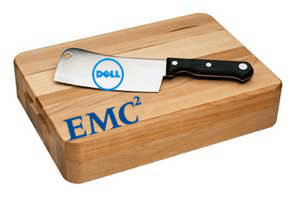
Will Dell Networking Wither Away?

chopping-block-Dell-EMC

The behemoth merger of Dell and EMC is nearing conclusion. The first week of August is the target date for the final wrap up of all the financial and legal parts of the acquisition. After that is done, the long task of analyzing product lines and finding a way to reduce complexity and product sprawl begins. We’ve already seen the spin out of Quest and Sonicwall into a separate entity to raise cash for the final stretch of the acquisition. No doubt other storage and compute products are going to face a go/no go decision in the future. But one product line which is in real danger of disappearing is networking.

Whither Whitebox?

The first indicator of the problems with Dell and networking comes from whitebox switching. Dell released OS 10 earlier this year as a way to capitalize on the growing market of free operating systems running on commodity hardware. Right now, OS 10 can run on Dell equipment. In the future, they are hoping to spread it out to whitebox devices. That assumes that soon you’ll see Dell branded OSes running on switches purchased from non-Dell sources booting with ONIE.

Once OS 10 pushes forward, what does that mean for Dell’s hardware business? Dell would naturally want to keep selling devices to customers. Whitebox switches would undercut their ability to offer cheap ports to customers in data center deployments. Rather than give up that opportunity, Dell is positioning themselves to run some form of Dell software on top of that hardware for management purposes, which has always been a strong point for Dell. Losing the hardware means little to Dell if they have to lose profit margin to keep it there in the first place.

The second indicator of networking issues comes from comments from Michael Dell at EMCworld this year. Check out this short video featuring him with outgoing EMC CEO Joe Tucci:

Some of the telling comments in here involve Michael Dell’s praise for the NSX business model and how it is being adopted by a large number of other vendors in the industry. Also telling is their reaffirmation that Cisco is an important partnership in VCE and won’t be going away any time soon. While these two things don’t seem to be related on the surface, they both point to a truth Dell is trying hard to accept.

In the future, with overlay network virtualization models gaining traction in the data center, the underlying hardware will matter little. In almost every case, the hardware choice will come down to one of two options:

  1. Which switch is the cheapest?
  2. Which switch is on the Approved List?

That’s it. That’s the whole decision tree. No one will care what sticker is on the box. They will only care that it didn’t cost a fortune and that they won’t get fired for buying it. That’s bad for companies that aren’t making white boxes or named Cisco. Other network vendors are going to try and add value in some way, but the overlay sitting on top of those bells and whistles will make it next to impossible to differentiate in anything but software. Whether that’s superior management capabilities, open plug-in model, or some other thing we haven’t thought of will make no difference in the end. Software will still be king and the hardware will be an inexpensive pawn or a costly piece that has been pre-approved.

Whither Wireless?

The other big inflection point that makes me worry about the Dell networking story is the lack of movement in the wireless space. Dell has historically been a company to partner first and acquire second. But with HPE’s acquisition of Aruba Networks last year, the dominos in the wireless space are still waiting to fall. Brocade raced out to buy Ruckus. Meru offered itself on a platter to anyone that would buy them. Now Aerohive stands as the last independent wireless vendor without a dance partner. Yes, they’ve announced that they are partnering with Dell, but have you been to the Dell Wireless Networking page? Can you guess what the Dell W-series is? Here’s a hint: it rhymes with “Peruba”.

Every time Dell leads with a W-series deployment, they are effectively paying their biggest competitor. They are opening the door to allowing HPE/Aruba to come in and not only start talking about wireless but servers, storage, and other networking as well. Dell would do well at this point to start deemphasizing the W-series and start highlighting the “new generation” of Aerohive APs and how they are going to the be the focus moving forward.

The real solution would be for Dell to buy a wireless company and take all the wireless expertise they are selling in-house. That would show they are serious about both the campus network of the future and the data center network needed to support their other server and storage infrastructure. Sadly, with Dell being leveraged due to the privatization of his company just two years ago and mounting debt for this mega merger, Dell is looking to make cash with spin offs instead of spending it on yet another company to ingest and subsume. Which means a real non-partner wireless solution is still many years away.


Tom’s Take

Dell’s networking strategy is in maintenance mode. Make switches to support faster speeds for now, probably with Tomahawk support soon, and hope that this whole networking thing goes software sooner rather than later. Otherwise, the need to shore up the campus wireless areas along with the coming decision about showing support fully behind NSX and partnerships is going to be a bitter pill to swallow. Perhaps Dell Networking will exist as an option for companies wanting a 100% Dell solution? Or maybe they are waiting for a new offering from Dell/EMC in the data center to drive profits to research and development to keep pace with Cisco and Arista? One can only hope that their networking flower doesn’t wither on the vine.

The 25GbE Datacenter Pipeline

pipeline

SDN may have made networking more exciting thanks to making hardware less important than it has been in the past, but that’s not to say that hardware isn’t important at all. The certainty with which new hardware will come out and make things a little bit faster than before is right there with death and taxes. One of the big announcements yesterday from Hewlett Packard Enterprise (HPE) during HPE Discover was support for a new 25GbE / 100GbE switch architecture built around the FlexFabric 5950 and 12900 products. This may be the tipping point for things.

The Speeds of the Many

I haven’t always been high on 25GbE. Almost two years ago I couldn’t see the point. Things haven’t gotten much different in the last 24 months from a speed perspective. So why the change now? What make this 25GbE offering any different than things from the nascent ideas presented by Arista?

First and foremost, the 25GbE released by HPE this week is based on the Broadcom Tomahawk chipset. When 25GbE was first presented, it was a collection of vendors trying to convince you to upgrade to their slightly faster Ethernet. But in the past two years, most of the merchant offerings on the market have coalesced around using Broadcom as the primary chipset. That means that odds are good your favorite switching platform is running Trident 2 or Trident 2+ under the hood.

With Broadcom backing the silicon, that means wider adoption of the specification. Why would anyone buy 25GbE from Brocade or Dell or HPE if the only vendor supporting it was that vendor of choice? If you can’t ever be certain that you’ll have support for the hardware in three or five years time, making an investment today seems silly. Broadcom’s backing means that eventually everyone will be adopting 25GbE.

Likewise, one of my other impediments to adoption was the lack of server NICs to ramp hosts to 25GbE. Having fast access ports means nothing if the severs can’t take advantage of them. HPE addressed this with the release of FlexFabric networking adapters that can run 25GbE Ethernet. More importantly, those adapters (and switches) can run at 10GbE as well. This means that adoption of higher bandwidth is no longer an all-or-nothing proposition. You don’t have to abandon your existing investment to get to 25GbE right away. You don’t have to build a lab pod to test things and then sneak it into production. You can just buy a 5950 today and clock the ports down to 10GbE while you await the availability and purchasing cycle to buy 25GbE NICs. Then you can flip some switches in the next maintenance window and be running at 25GbE speeds. And you can leave some ports enabled at 10GbE to ensure that there is maximum backwards compatibility.

The Needs of the Few

Odds are good that 25GbE isn’t going to be right for you today. HPE is even telling people that 25GbE only really makes sense in a few deployment scenarios, among which are large container-based hosts running thousands of virtual apps, flash storage arrays that use Ethernet as a backplane, or specialized high-performance computing (HPC) tricks with RDMA and such. That means the odds are good that you won’t need 25GbE first thing tomorrow morning.

However, the need for 25GbE is going to be there. As applications grow more bandwidth hungry and data centers keep shrinking in footprint, the network hardware you do have left needs to work harder and faster to accomplish more with less. If the network really is destined to become a faceless underlay that serves as a utility for applications, it needs to run flat out fast to ensure that developers can’t start blaming their utility company for problems. Multi-core server architectures and flash storage have solved two of the three legs of this problem. 25GbE host connectivity and the 100GbE backbone connectivity tied to it, solve the other side of the equation so everything balances properly.

Don’t look at 25GbE as an immediate panacea for your problems. Instead, put it on a timeline with your other server needs and see what the adoption rate looks like going forward. If server NICs are bought in large quantities, that will drive manufactures to push the technology onto the server boards. If there is enough need for connectivity at these speeds the switch vendors will start larger adoption of Tomahawk chipsets. That cycle will push things forward much faster than the 10GbE / 40GbE marathon that’s been going on for the past six years.


Tom’s Take

I think HPE is taking a big leap with 25GbE. Until the Dell/EMC merger is completed they won’t find themselves in a position to adopt Tomahawk quickly in the Force10 line. That means the need to grab 25GbE server NICs won’t materialize if there’s nothing to connect them. Cisco won’t care either way so long as switches are purchased and all other networking vendors don’t sell servers. So that leaves HPE to either push this forward to fall off the edge of the cliff. Time will tell how this will all work out, but it would be nice to see HPE get a win here and make the network the least of application developer problems.

Disclaimer

I was a guest of Hewlett Packard Enterprise for HPE Discover 2016. They paid for my travel, hotel, and meals during the event. While I was briefed on the solution discussed here and many others, there was no expectation of coverage of the topics discussed. HPE did not ask for, nor were they guaranteed any consideration in the writing of this article. The conclusions and analysis contained herein are mine and mine alone.

Don’t Touch My Mustache, Aruba!

dont-touch-my-mustache

It’s been a year since Aruba Networks became Aruba, a Hewlett-Packard Enterprise Company. It’s  been an interesting ride for everyone involved so far. There’s been some integration between the HPE Networking division and the Aruba teams. There’s been presentations and messaging and lots of other fun stuff. But it all really comes down to the policy of non-interference.

Don’t Tread On Me

HPE has done an admirable job of keeping their hands off of Aruba. It sounds almost comical. How many companies have acquired a new piece and then done everything possible to integrate it into their existing core business? How many products have had their identity obliterated to fit in with the existing model number structure?

Aruba isn’t just a survivor. It’s come out of the other side of this acquisition healthy and happy and with a bigger piece of the pie. Dominick Orr didn’t just get to keep his company. Instead, he got all of HPE’s networking division in the deal! That works out very well for them. It allows Aruba to help integrate the HPE networking portfolio into their existing product lines.

Aruba had a switching portfolio before the acquisition. But that was just an afterthought. It was designed to meet the insane requirements of the new Gartner Wired and Wireless Magic Quadrant. It was a product pushed out to meet a marketing need. Now, with the collaboration of both HPE and Aruba, the combined business unit has succeeded in climbing to the top of the mystical polygon and assuming a leading role in the networking space.

Could you imagine how terrible it would have been if instead of taking this approach, HPE had instead insisted on integration of the product lines and renumbering of everything? What if they had insisted that Aruba engineers, who are experts in their wireless field, were to become junior to the HPE wireless teams? That’s the kind of disaster that would have led to the fall of HPE Networking sooner or later. When good people get alienated in an acquisition, they flee for the hills as fast as their feet will carry them. One look at the list of EMC and VMware departures will tell you the truth of that.

You’re Very Welcome

The other thing that makes it an interesting ride is the way that people have reacted to the results of the acquisition. I can remember seeing how folks like Eddie Forero (@HeyEddie) were livid and worried about how the whole mess was going to fall apart. Having spoken to Eddie this week about the outcome one year later, he seems to be much, much more positive than he was in the past. It’s a very refreshing change!

Goodwill is something that is very difficult to replace in the community. It takes ages to earn and seconds to destroy. Acquiring companies that don’t understand the DNA of the company they have acquired run the risk of alienating the users of that solution. It’s important to take stock of how you are addressing your user base and potential customers regularly after you bring a new business into the fold.

HPE has done a masterful job of keeping Aruba customers happy by allowing Aruba to keep their communities in place. Airheads is a perfect example. Aruba’s community is a vibrant place where people share knowledge and teach each other how to best utilize solutions. It’s the kind of place that makes people feel welcome. It would have been very easy for HPE to make Airheads conform to their corporate policies and use their platforms for different purposes, such as a renewed focus on community marketing efforts. Instead, we have been able to keep these resources available to all to keep a happy community all around.


Tom’s Take

The title above is actually holds a double meaning. You might think it refers to keeping your hands off of something. But “don’t touch my mustache” is a mnemonic phrase to help people remember the Japanese phrase do itashimashite which means “You’re Welcome”.

Aruba has continued to be a leader in the wireless community and is poised to make waves in the networking community once more because HPE has allowed it to grow through a hands-off policy. The Aruba customers and partners should be very welcome that things have turned out as they have. Given the graveyard of failed company acquisitions over they years, Aruba and HPE are a great story indeed.

The Butcher’s Bill

chopping-block-Dell-EMC

Watching a real butcher work is akin to watching a surgeon. They are experts with their tools, which are cleavers and knives instead of scalpels and stitches. They know how to carve the best cut of meat from a formless lump. And they do it with the expert eye of a professional trained in their trade.

Butcher is a term that is often loaded with all manner of negative connotations. It makes readers think of indiscriminate slaughter and haphazard destruction. But the real truth is that a butcher requires time and training to cut as they do. There is nothing that a butcher does that isn’t calculated and careful.

Quick Cuts

Why all the discussion about butchers? Because you’re going to see a lot more comparisons in the future when people talk about the pending Dell/EMC acquisition. The real indiscriminate cutting has already started. EMC hid an undisclosed number of layoffs in a Dec. 31 press release. VMware is going to take a 5% hit in jobs, including the entire Workstation and Fusion teams.

It’s no secret that the deal is in trouble right now. Investors are cringing at some of the provisions. The Virtustream spin out was rescinded after backlash. The tracking stock created to creatively dodge some tax issues is now so low that it needs a ladder to tickle a snake’s belly. Every news day brings another challenge to the deal that is more likely to sink it than to save it.

In order to meet this rising tide of disillusionment, Dell and EMC are pulling out all the stops. Expect to see more ham-handed decisions in the future, like cashiering entire teams and divisions in order to get under some magical number that investors like and will be willing to support in order to make this mega merger happen. Given Michael Dell’s comments about investors during his run to make Dell a private company, I’m sure he probably has a very sour taste in his mouth thanks to all this.

Butchers work to make the best possible product from the raw materials given. There are no second chances. No do-overs. You have to get it right the first time. That very reason is why all this scrambling looks more like the throes of a desperate gambit instead of a sound merger strategy.

Prime Cuts

All companies that merge have duplicate jobs. It’s a fact of business. Much of the job overlap comes in the administrative side of the house. Legal, accounts, and management teams all have significant overlap no matter where you go. And while those teams are important for keeping the lights on and getting the bills paid, the positions represent redundancy that almost never gets trimmed away. Staff positions keep the machine moving. That means they stay.

Assuming that no one inside of either organization wants to cut staff positions, how can we approach something resembling more sane carving that accomplishes the same goals without leading to the hemorrhaging that will come from large-scale indiscriminate layoffs?

  1. Kill off needless products. While I’m sure this is an on-going process, there are some pretty easy targets for this one. Haven’t sold that SKU in two years? Gone. Wind down support and give a discounted upgrade to something you do support. Kill off SKUs that exists solely to win awards.
  2. Reduce products by collapsing product lines. You don’t need two entry-level products for iSCSI storage. Or five different enterprise-class arrays. Kill off the things that overlap or directly compete against each other. Who survives? The one that sells better. The one that has better tech. The one that costs less to support. If you’re going to pinch pennies in other places, you had better start doing it here too.
  3. Management reductions need to happen too. For all the talk of reducing engineering teams and creating synergy, it’s surprising how often managers escape the layoffs. They’re almost like professors with tenure. Well, it’s time for them to prove their worth too. If their department is gone, so are they. If they are an ineffective manager, pay them a severance and let them earn their role somewhere else all over again. And that goes double for the 500 CTOs that seem to have sprung up inside large organizations lately.

You’d think these things were obvious and easy to figure out. Yet these are the kinds of decisions that get overlooked during every merger.


Tom’s Take

Layoffs hurt lots of people. It’s never fun when your teammates and friends get sacked. But you can be smart about who goes and how best to make the new company survive and even thrive. Chopping away at the company with a machete is like a horror movie. People are going to scream and cry and you’ll be lucky to live through the end. Instead of taking that approach, be smart. Make the best cuts you can from what you’ve got. Find ways to package the parts no one might want with other parts that people find attractive. Do what you can to use as much as you can. Think like a professional butcher. Don’t act like an amateur one.

HP Is Buying Aruba. Who’s Next?

HPAruba_Networks_Logo

Sometimes all it takes is a little push. Bloomberg reported yesterday that HP is in talks to buy Aruba Networks for their wireless expertise. The deal is contingent upon some other things, and the article made sure to throw up disclaimers that it could still fall through before next week. But the people that I’ve talked to (who are not authorized to comment and wouldn’t know the official answer anyway) have all said this is a done deal. We’ll likely hear the final official confirmation on Monday afternoon, ahead of Aruba’s big Atmosphere (nee Airheads) conference.

R&D Through M&A

This is a shot in the arm for HP. Their Colubris-based AP lineup has been sorely lacking in current generation wireless technology, let alone next gen potential. The featured 802.11ac APs on their networking site are OEMed directly from Aruba. They’ve been hoping to play the OEM game for a while and see where the chips are going to fall. Buying Aruba gives them second place in the wireless market behind Cisco overnight. It also fixes the most glaring issue with Colubris – R&D. HP hasn’t really been developing their wireless portfolio. Some had even thought it was gone for good. This immediately puts them back in the conversation.

More importantly to HP, this acquisition cuts off many of their competitor’s wireless plans at the knees. Dell, Juniper, Brocade, Alcatel Lucent, and many others OEM from Aruba or have a deep partnership agreement. By wrapping up the entirety of Aruba’s business, HP has dealt a blow to the single-source vendors that are playing in the wireless market. And this is going to lead to some big changes relatively soon.

The Startup Buzz

Dell is perhaps the most impacted by this announcement. A very large portion of their wireless offerings were Aruba. They sold APs, controllers, and even ClearPass through their channels (with the names filed off, of course). Now, they are back to square one. How are they going to handle the most recent deals? What are their support options?

I little thought exercise with my friend Josh Williams (@JSW_EdTech) had a few possibilities:

  1. Dell forces HP to buyout all the support contracts for Dell/Aruba customers. That makes sense for Dell, but it will turn a lot of customers against them, especially when HP lets those customers know the reasons why.
  2. Dell agrees to release the developments they’ve done on the platform to HP in return for HP taking the support business. Quiet and clean. Which is why it likely won’t happen.
  3. Dell pays HP an exorbitant amount of money to take the support contracts. This gives HP the capital to take on all those new support contracts and gives Dell an exit to rebuild. This is probably what HP wants, but could end up sinking the deal.

Dell got burned, plain and simple. They likely could have purchased Aruba months ago and solidified the relationship. Instead, they are now looking for a new partner. However, I don’t think they are going to get burned again. Rather than shopping for a friend, they are going to be shopping for an acquisition. My money has always been on Aerohive. They have an existing relationship. The Aerohive controller-less cloud model fits Dell’s new strategies. And they would be a much cheaper pickup than Aruba. There is precedence for Dell skipping the big name and picking up a smaller company that’s a better fit. It’s a hard pill to swallow, but it gives Dell the chance to move forward with a lasting relationship.

Softwarely Defined

Brocade is a line-of-business partner of Aruba. They’ve only recently gotten involved since Motorola shut down their WLAN business. This is a good sign for them. That means they can exit from their position and not be significantly affected. It does leave them with a quandary of where to go.

The first choice would be to go back to the Motorola relationship, now in the form of Zebra Technologies. Zebra inherited quite a large portion of the WLAN space from Motorola, but they’ve been keeping rather quiet about it. Are they angling to be more of a support organization for existing installs? Or are they waiting for a big splash announcement to get back in the game? Partnering with Brocade would give them that announcement given the elevated profile Brocade has today.

Brocade’s other option would be to go down the SDN road. The plan for a while has been to embrace SDN, OpenFlow, and all things software defined. The natural target for this would be Meru Networks. Meru has been embracing SDN as well as of late. They had a nice event last year showcasing their advances in SDN. Brocade could bolster that SDN knowledge while obtaining a good wireless company that would give them the strength they need to augment their enterprise business.

Permission To Retire

The odd company out is Juniper. I’ve heard that they were involved at first in trying to acquire Aruba, but when you’re betting against HP’s pockets you will lose in the long run. Their other problem is Elliott Management, everyone’s new favorite “activist investor”.

Elliott has made no secret that they see the value in Juniper in the service provider market. As far back as last year, Elliott has been trying to get Juniper to reave off the ancillary businesses, including security, enterprise, and wireless. Juniper has officially ended sales for Trapeze-based products already. Why would Elliott let them buy another wireless company so soon after getting rid of the last one. Even as successful as Aruba is, Elliott would see it as another distraction. And when someone that active is calling the shots, you can’t go against them, lest you end up unemployed.

This is the end for Juniper’s wireless aspirations. That’s not a bad thing, necessarily. This gives them the impetus needed to focus on the service provider market. It also gives them a smaller enterprise switching portfolio to package up and sell off should that pound of flesh be necessary to sate Elliott as well. Time will tell.

Everyone Else

Any other companies with Aruba relationships are either dipping their toes in the wireless waters or don’t care enough to worry about the impact it will have. It will be an easy matter for companies like Alcatel-Lucent to go out and find a new OEM partner, likely with someone like Extreme Networks or Ruckus. Those companies are making great technology and will be happy to supply the APs that customers need. Showing off their technology will also give them great in-roads into customers that might not have been on their radar before.


Tom’s Take

It’s going to be an exciting time in the wireless space. HP’s acquisition is going to start the falling dominoes for other companies to buy into the wireless space as well. When the dust settles, there will be new number twos and number threes in the market. It also clears the middle of the space for up-and-comers to grow. Cisco is going to stay number one for a while, and HP will be number two when this deal closes. But until we see the fallout from who will be purchased and partnered with it’s tough to say who will be a clear winner. But make sure you’ve got your popcorn ready. Because this isn’t over yet. Not by a long shot.


Vendor Whitebox Switches – Better Together?

ChocoPeanut

Whitebox switching has moved past the realm of original device manufacturers and has been taken up by traditional networking vendors. Andre Kindness (@AndreKindness) of Forrester recently posted that he fields several calls from his customers every day asking about a particular vendor’s approach to whitebox switching. But what do these vendor offerings look like? And can we predict how a given vendor will address the whitebox market?

Chocolate In My Peanut Butter

Dell was one of the first traditional networking vendors to announce a whitebox switch offering that decoupled the operating system from the switching hardware. Dell offered packages from Cumulus Linux and Big Switch Networks alongside their PowerConnect lineup. This makes sense when you consider that the operating system on the switch has never been the strong suit of Dell. The PowerConnect OS is not very popular with network engineers, being very dissimilar from more popular CLIs such as Cisco IOS and its look-alikes.  Their attempts to capitalize on the popularity of Force Ten OS (FTOS) and adapt it or use on PowerConnect switches has been difficult at best, due to the divide been hardware architecture of the two platforms.

What Dell is very good at is offering hardware at a greatly reduced cost. By utilizing this strength, they can enter the whitebox market successfully by partnering with OS vendors to provide customer options. This also gives them time to adapt FTOS to more switches and attempt to drive acquisition posts down once the port of FTOS to PowerConnect is complete.

Peanut Butter In My Chocolate

What happens when a vendor sees software as their strength? You get an announcement like the one last week from Juniper Networks. Juniper has put a significant amount of time and effort into Junos. The FreeBSD base of the system gives it the adaptability that Cumulus enjoys. Since Juniper sees Junos as a huge advantage, their oath to whitebox switching was to offer hardware that reduces the acquisition cost. Porting Junos to run on the OCP-based OCX1100 allows Juniper to use silicon that is more in line with merchant offering price points. The value to the customer comes from existing experience with Junos allowing for reduced learning time on the new platform.

So how will the rest of the market adopt whitebox switching offerings? HP will likely go the same route as Dell, as their software picture is murky with products split evenly between HP Procurve OS and 3Com/H3C Comware. HP has existing silicon manufacturing facilities that allow for economy of scale to reduce acquisition costs to the customer. Conversely, Brocade will likely leverage existing Vyatta development and investment in projects like OpenDaylight to standardize their whitebox offerings on software while offering OCP-style hardware platforms.

The 800-pound Whitebox Gorilla

And what of Cisco? Cisco had invested significant time and effort into both hardware and software. IOS is being renovated with API access and being ported into containers to broaden the platforms on which it can operate. The Cisco investment in custom silicon development is significant as well, with only the Nexus 3000 and 9000 series using merchant offerings from Broadcom. Their eventual whitebox offering could take any form.

Cisco feels very strongly about keeping IOS and its variants exclusive to Cisco hardware. Given that they sued Arista Networks late last week for patent infringement in EOS, it should be apparent how strongly they feel about IOS. That will be the impetus that pushes them to offering some limited custom silicon that is capable of running third-party operating systems. This allows Cisco to partner closely with one of those developers to ensure peak performance and tight integrations with whatever hardware Cisco includes.  They would likely offer this platform with a bundle of SmartNET support services, recouping the costs of producing the switch with some very high margin services.

The possibility of porting IOS to an OCP-like reference platform is remote at best. A whitebox IOS offering would still carry a high price tag to reflect Cisco R&D and would be priced too high above what customers would be willing to pay for total acquisition cost.  It would also open the door for someone to “port” that version of IOS to run on platforms that it shouldn’t be running on.  At the very least, it will expose Cisco in the market as having too high a price tag on their intellectual property in IOS and give competitors like Juniper and Big Switch ammunition to fight back.


Tom’s Take

When evaluating vendor whitebox offerings, be sure your assessment of the strengths matches theirs. Wide adoption of a given strategy will solidify that approach in the future. Be sure to give feedback to your local account teams and tell them the critical features you need to be supported. That will ensure the vendor has you in mind when the time comes to produce a whitebox offering.  And remember that you always have the option of going your own way.  Nothing says that you have to buy a solution with bundled services from traditional networking vendors.  If you’re willing to fly without a safety net for a while, you can find some great deals on ODM switches and OSes to run on them.

HP Networking – Hitting The Right Notes

HP has quietly been making waves recently with their networking strategies.  They recently showed off their technology around software defined networking (SDN) applications at Interop New York.  Here’s a video:

It would seem that HP has been doing a lot of hard work on the back end with SDN.  So why haven’t we heard about it?

Trumpet and Bugle

HP Networking hasn’t been in the news as much as Cisco and VMware as of late.  When you consider that both of those companies are pushing agendas related to redefining the paradigm of networking around policy and virtualization their trumpeting of those agendas makes total sense.  But even members of the League of Non-Aligned Vendors like Brocade are talking a lot about their SDN strategy with the Vyatta Controller and OpenStack integrations.  Vendors have layers and layers of plans for the “new” networking.  But HP has actually been doing it!  Why haven’t we known until now?

HP has been content to play the role of the bugler to the trumpeters of the bigger organizations.  Rather than talking over and over again about what they are planning on doing, HP waits until they’ve actually done it to talk about it.  It’s a sound strategy.  I love making everything work first and then discussing what you’ve done rather than spending week after week, month after month, talking about a plan that may or may not come to fruition.

The issue with HP is that they need to bugle a little more often to stay afloat in the space.  Only making announcements won’t cut it.  The breakneck pace of innovation and adoption is disrupting the ability of laggard developers to stay afloat.  New technologies are being supplanted by upstarts.  Docker is old news.  Now we’re talking about SocketPlane and Rocket.  You’d be forgiven if you haven’t been keeping up as a blogger or engineer.  But if you’ve missed the boat as a vendor, you’re going to have a hard time treading water.

The Tijuana Brass

How can HP solve their problem?  Technically, they need to keep doing what they’ve been doing all along.  They are making good decisions and innovating around ideas like the HP SDN App Store.  What they need to do it tell more people about it.  Get the word out.  Start some discussions around what you’re doing.  Don’t be afraid to engage.  The more you talk to people about your solutions, the more your name will come up in conversation. You need to be loud and on-key.  Herb Alpert and the Tijuana Brass weren’t popular right away.  It took years of recording and playing before the mainstream “discovered” them and popularized their music.

HP Networking has spent considerable time building SDN infrastructure.  The fact that their are OpenFlow images for a wide variety of their existing switch infrastructure is proof they are concerned about making everything fit together.  Now it’s time to tell the story.  With the impending divestiture of HP’s enterprise businesses from the consumer line, it will be far too easy to get lost in the shuffle of reorganization.  They way to prevent that is to step out and make yourself known.  Write blogs, record podcasts, and interact with the community.  Don’t be afraid to toot your own horn a little.


Disclaimer

HP invited me to attend HP Discover Barcelona as their guest.  They provided travel and lodging expenses during my time in Europe.  They did not require any blog posts or consideration for this invitation, nor where they offered any on my part.  The opinions and analysis expressed herein represents my thoughts alone.

The Pain of Licensing

Embed from Getty Images

Frequent readers of my blog and Twitter stream may have noticed that I have a special loathing in my heart for licensing.  I’ve been subjected to some of the craziest runarounds because of licensing departments.  I’ve had to yell over the phone to get something taken care of.  I’ve had to produce paperwork so old it was yellowed at the edges.  Why does this have to be so hard?

Licensing is a feature tracking mechanism.  Manufacturers want to know what features you are using.  It comes back to tracking research and development.  A lot of time and effort goes into making the parts and pieces of a product.  Many different departments put work into something before it goes out the door.  Vendors need a way to track how popular a given feature might be to customers.  This allows them to know where to allocate budgets for the development of said features.

Some things are considered essential.  These core pieces are usually allocated to a team that gets the right funding no matter what.  Or the features are so mature that there really isn’t much that can be done to drive additional revenue from them.  When’s the last time someone made a more streamlined version of OSPF?  But there are pieces that can be attached to OSPF that carry more weight.

Rights and Privileges

Here’s an example from Cisco.  In IOS 15, OSPF is considered a part of the core IOS functionality.  You get it no matter what on a router.  You have to pay an extra license on a switch, but that’s not part of this argument.  OSPF is a mature protocol, even in version 3 which enables IPv6 support.  If you have OSPF for IPv4, you have it for IPv6 as well.  One of the best practices for securing OSPF against intrusion is to authenticate your area 0 links.  This is something that should be considered core functionality.  And with IPv4, it is.  The MD5 authentication mechanism is built into the core OS.  But with IPv6, the IPSec license needed to authenticate the links has to be purchased as a separate license upgrade.  That’s because IPSec is part of the security license bundle.

Why the runaround for what is considered a best practice, core function?  It’s because IPv6 uses a different mechanism.  One that has more reach that simple MD5 authentication.  In order to capture the revenue that the IPSec security team is putting in, Cisco won’t just give away that functionality.  Instead, it needs to be tracked by a license.  The R&D work from that team needs to be recovered somehow.  And so you pay extra for something Cisco says you should be doing anyway.  That’s the licensing that upsets me so.

License Unit Report

How do we fix it?  The money problem is always going to be there.  Vendors have to find a way to recapture revenue for R&D while at the same time not making customers pay for things they don’t need, like advanced security or application licenses.  That’s the necessary evil of having affordable software.  But there is a fix for the feature tracking part.

We have the analytics capability with modern software to send anonymized usage statistics to manufacturers and vendors about what feature sets are being used.  Companies can track how popular IPSec is versus MD5 or other such feature comparisons.  The software doesn’t have to say who you are, just what you are using.  That would allow the budgets to be allocated exactly like they should be used, not guessing based on who bought the whole advanced communications license for Quality of Service (QoS) reporting.


Tom’s Take

Licensing is like NAT.  It’s a necessary evil of the world we live in.  People won’t pay for functionality they don’t use.  At the same time, they won’t use functions they have to pay extra for if they think it should have been included.  It’s a circular problem that has no clear answer.  And that’s the necessary evil of it all.

But just because it’s necessary doesn’t mean we can’t make it less evil.  We can split the reporting pieces out thanks to modern technology.  We can make sure the costs to develop these features gets driven down in the future because there are accurate statistics about usage.  Every little bit helps make licensing less of a hassle that it currently is.  It may not go away totally, but it can be marginalized to the point where it isn’t painful.